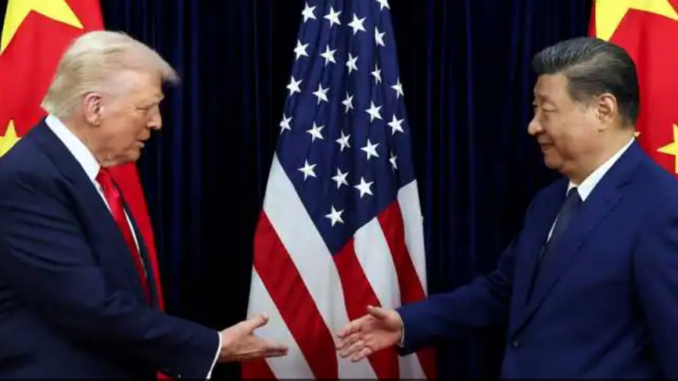
Venezuela, Cuba, Iran, Greenland: At first, it looks like chaos. Different countries. Different crises. But then you start connecting the dots. The US is showing up in Venezuela, Iran, Cuba, and even Greenland. Not randomly. Not occasionally. But repeatedly—and with intent. Trump has his eyes on Diego Garcia island in Chagos as well and the recent US army activity in Bangladesh and Pakistan also cannot be ignored.
Esepcially when Trump’s own words are giving that intent away. The shift is no longer subtle.
Start with Venezuela. The US didn’t just pressure the government. It carried out a direct operation that removed President Nicolás Maduro. That alone marked a shift. Washington has intervened before. But this felt different. Faster. More decisive. Less concerned about global optics.
And then came the messaging. Trump’s language tells a bigger story. What makes this moment stand out is not just action. It’s how openly it is being framed.
On Cuba, Donald Trump didn’t hide ambition. He said he expected to have the “honor of taking Cuba” and added, “I can do anything I want.”
In another warning, he told Havana to “make a deal” or face consequences. That’s not traditional diplomacy. That’s ownership language.
Greenland: Even clearer
If Cuba sounded aggressive, Greenland sounded strategic—and personal. Trump was blunt, “We do need Greenland, absolutely.”
He went further in private remarks. Ownership, he said, gives power that agreements cannot. At one point, he even suggested the US would act “whether they like it or not.” This is not about partnership. It’s about control.
Venezuela and beyond
After the Venezuela operation, concerns spread quickly. Reports noted that multiple countries—from Cuba to Greenland—were suddenly being discussed as possible next steps.
That’s when analysts started using a new phrase: expansion. Not in the old colonial sense. But in a modern, strategic way.
The China comparison becomes unavoidable. This is where things get uncomfortable.
For years, the US criticized China for expanding influence— through ports, loans, infrastructure, and pressure.
But now, the US seems to be doing something similar.
The difference? Speed and style.
China builds slowly, then locks in control. The US moves fast, then reshapes the ground. Different playbooks. Same objective.
Control key regions. Secure resources. Limit rivals. It’s also about sending a signal. There’s another layer here. Many of these regions—especially in Latin America—have seen growing Chinese presence. So when the US steps into Venezuela, or pressures Cuba, it’s not just about those countries.
It’s a message. This space still belongs to Washington. The risk of crossing a line. Here’s the real tension.
The US still talks about democracy. Sovereignty. Rules. But its actions—and increasingly its language—are moving elsewhere.
When a leader says he can “take” a country, or act regardless of consent, it changes perception. Allies get uneasy. Rivals feel justified. Smaller nations feel exposed.
The bigger shift -This is not just about Trump. Or one policy. It’s about how power is evolving. The world is moving toward a model where influence is not negotiated quietly. It is asserted openly.
China helped normalize that model. Now, the US seems to be adapting to it.
This isn’t imitation in the simple sense. It’s convergence. Two very different powers. Now behaving in increasingly similar ways. And that may reshape global politics more than any single intervention ever could.
Bureau Report
Leave a Reply