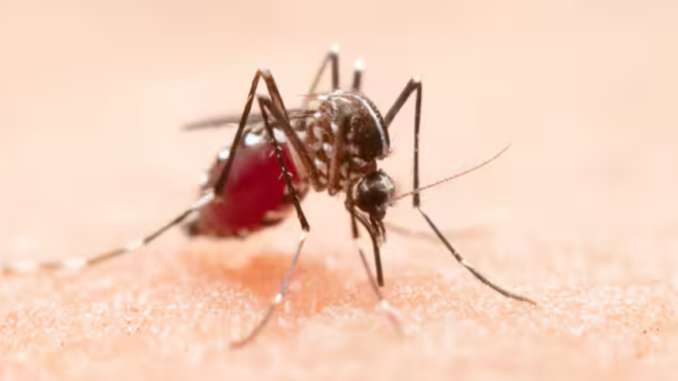
NewDelhi: World Malaria Day is being observed today as part of a global effort led by the World Health Organization (WHO) to raise awareness about malaria and other mosquito-borne diseases that still pose major public health challenges.
Malaria remains one of the most common mosquito-borne diseases, especially in tropical and subtropical regions. It is caused by Plasmodium parasites, which are spread through the bites of infected female Anopheles mosquitoes. These mosquitoes are most active from dusk to dawn.
Dr Saroj Kumar Yadav, Consultant, Internal Medicine at Aakash Healthcare, said, “World Malaria Day is a significant alert that the diseases caused by mosquitoes remain a major health issue among people, particularly in tropical and subtropical areas where the warm climate and stagnant bodies of water provide perfect breeding grounds to the mosquitoes.”
He added, “Plasmodium parasites that are spread by bites of female Anopheles mosquitoes cause malaria. The usual symptoms are high fever, chills, Perspiration, headache, pain, nausea, and fatigue. In the worst-case scenarios, malaria may attack the brain, kidneys and lungs and thus it would be very important to diagnose it in the early stages.”
Beyond Malaria: A Broader Threat
Experts warn that focusing only on malaria overlooks several other serious mosquito-borne infections affecting millions globally.
Dr P. Venkata Krishnan, Senior Consultant and Director of Internal Medicine at Narayana Hospital, said, “It is necessary to note that the problem of mosquito-borne diseases is one of the key focus areas of the general population in tropical and subtropical countries. Such diseases as malaria, dengue, chikungunya, Zika virus infection, yellow fever, Japanese encephalitis, and lymphatic filariasis are transmitted by mosquitoes, mostly by the species Anopheles, Aedes, and Culex.”
Dr Viresh Prashant Mehta, Senior Consultant at Dharamshila Narayana Superspeciality Hospital, said, “The diseases are triggered by various viruses and parasites but have one thing in common and that is; infected mosquito bites.”
Which Seven Mosquito-Borne Diseases Should You Watch Out For?
The doctor also highlighted seven major mosquito-borne diseases that require attention:
- Dengue
- Yellow fever
- Chikungunya
- Zika virus infection
- Japanese encephalitis
- Lymphatic filariasis (elephantiasis)
- West Nile virus
Dr Pranjit Bhowmik, Chairman of Internal Medicine at Asian Hospital, said, “The other significant threat is the dengue fever caused by dengue virus and transmitted by Aedes aegypti mosquitoes and especially during monsoon seasons. Symptoms such as high fever, intense body aches, headaches, rashes, and tendencies to bleed are warning signs of severe cases.”
Further detailing these illnesses, Dr Saroj Kumar Yadav said, “Aedes mosquitoes also transmit Chikungunya which normally leads to sudden fever and intense joint pains that can last weeks and even months. Zika virus infection is usually mild, but it may lead to fever, rash, conjunctivitis, and joint pains. This is especially worrying to pregnant women as it can cause birth defects in babies. Culex mosquitoes spread Japanese encephalitis which may attack the brain and cause seizures, confusion, and complications to the nervous system. Another disease transmitted by mosquitoes, which destroys the lymphatic system and can severely swell the limbs, is lymphatic filariasis, also known as elephantiasis. Yellow fever is a serious viral disease spread by mosquitos that causes fever, jaundice and bleeding complications in visitors to endemic regions although it is more prevalent in certain regions of Africa and South America. As the number of people travelling around the world rises, there is need to be awareness on such infections.”
Mosquito Prevention Measures
Doctors stress that prevention and early detection are key to reducing the burden of these diseases.
Dr Ali Sher, Senior Consultant at Apollo Spectra Hospital, Delhi, said, “Prevention becomes the most effective strategy in these conditions. Individuals should prioritise eliminating those sources of water which are stagnant in their homes, as they serve as bleeding grounds for all mosquitos. Using mosquito repellents. Wearing full sleeves clothes and using mosquito nets mainly for children and elders can also reduce the risk of infection. Efforts made by entire community such as regular fumigation and awareness campaigns are equally significant in controlling the spread.”
He added, “It is also very crucial to recognise early warning signs such as persistent level of fever, body aches, headache and seek medical attention on priority basis. Delay in diagnosis can also lead to complications, mainly in vulnerable populations. With rapidly increasing urbanisation and changes in climate, bleeding patterns of mosquitoes are also transforming, making vigilance even more significant. A combination of individual responsibilities, public health measures, and timely interventions can go a long way in order to reduce the burden of mosquito born diseases. In addition, maintaining a personal level of hygiene can further reduce the chance of mosquito breeding.”
Mosquito Control Through Simple Steps
Maintaining hygiene and eliminating mosquito breeding grounds remain essential preventive measures.
Dr Narendra Kumar Singhla, Principal Consultant at Sri Balaji Action Medical Institute, said, “Some of the simple steps such as ensuring clean surroundings, avoiding accumulation of water in coolers, flower pots, and open containers and maintaining a proper level of sanitation can significantly reduce breeding of mosquitoes. Personal protection measures like applying mosquito repellent, using coils, and sleeping under mosquito nets are highly effective. For all travellers, mainly those visiting, taking more precautions and being aware of vaccination requirements where applicable is essential.”
As World Malaria Day is observed today, health experts underline the importance of awareness, community participation, and timely medical care in combating not just malaria but the wider range of mosquito-borne diseases.
Bureau Report
Leave a Reply