NewDelhi: Pakistan has written to the United Nations raising concerns over India’s decision to keep the Indus Waters Treaty in abeyance. Islamabad says the move is unilateral and could have implications for regional peace and stability.
Asim Iftikhar, Pakistan’s permanent representative to the UN, submitted the letter to the president of the Security Council on behalf of the deputy prime minister and foreign minister. In a statement on X, the country’s mission said the suspension of the treaty for a year has affected not only political relations but also humanitarian conditionsand regional stability.
New Delhi had placed the treaty in abeyance last year after a deadly terror attack in Jammu and Kashmir’s Pahalgam following which diplomatic engagement with Islamabad was reduced. The decision to suspend the 1960 water-sharing agreement was taken in a meeting of the Cabinet Committee on Security.
So, how much loss has Pakistan suffered after one year of the suspension of the treaty?
What the Indus Waters Treaty sets out
Signed in 1960 with the World Bank mediation, the treaty divided river waters between the two countries. India got control over the eastern rivers (Ravi, Beas and Sutlej), while Pakistan was given rights over the western rivers (Indus, Jhelum and Chenab).
The agreement included routine obligations such as annual meetings between water commissioners, sharing river flow data and inspection visits of river projects on both sides.
He said the two sides usually met in May, with a joint report submitted to both governments by June 1. With the suspension in place, these meetings, inspection visits and data sharing have stopped.
What has changed in one year
Experts say the immediate impact over the past year has not been large, but concerns could grow over time. When a long-standing agreement is paused, uncertainty naturally increases.
They said India’s ability to fully block water under the treaty has limits, but any future infrastructure changes could affect water flow to Pakistan.
Water flow risks
Under the treaty, India is allowed to build run-of-the-river projects on western rivers. Pakistan argues that such projects can still affect timing and flow.
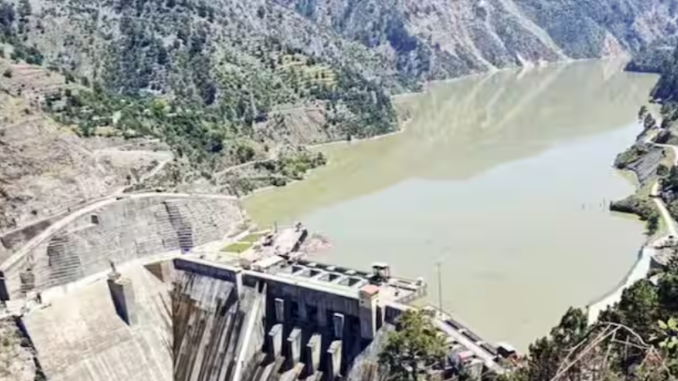
India can regulate storage in its dams, which can affect downstream flow patterns. If reservoirs are filled, water flow towards Pakistan can reduce, and if they are emptied, excess water can move downstream.
Experts also point out that regular data sharing between the two countries has stopped for a year, making water planning difficult.
Agriculture and timing concerns
The biggest challenge for Pakistan is not immediate shortage but unpredictability. Water may arrive when it is not needed or fail to arrive during critical farming periods.
This can affect agricultural planning because farming depends heavily on timing. If flow data is not shared, both floods and shortages become harder to manage.
What happens next at the UN
Pakistan’s move at the Security Council is largely seen as a diplomatic step. Experts say it is unlikely to produce immediate action against India.
Pakistan could also explore other international legal forums, including the International Court of Justice. If a ruling goes in its favour and is not followed, the issue could return to the United Nations again.
Pakistan may approach other platforms such as the European Union and the United States to build pressure, arguing that a binding treaty is being ignored.
What the treaty was meant to achieve
The Indus Waters Treaty was signed after nine years of negotiations between India and Pakistan with the World Bank involvement. It was signed in Karachi in 1960 by then Indian Prime Minister Jawaharlal Nehru and Pakistan’s President Ayub Khan.
At the time, the agreement was seen as a way to ensure water-sharing stability even during political tensions. It has survived wars and crises for over six decades.
The treaty also created a Permanent Indus Commission to handle disputes, with provisions for neutral experts and arbitration if needed.
Today, with the agreement in abeyance, both sides are watching how long the present situation continues and what it means for one of the most important cross-border water systems in the world.
Bureau Report
Leave a Reply