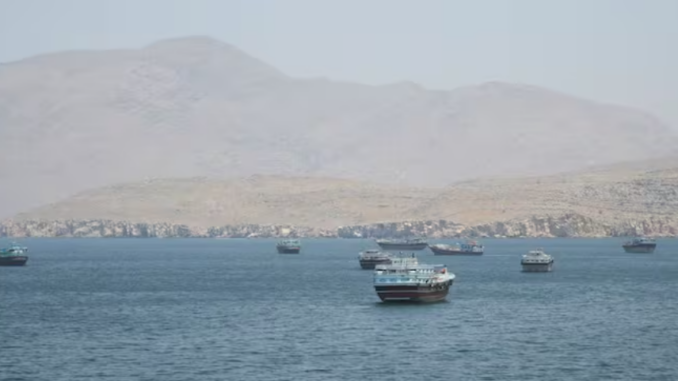
Tehran/Israel: US-Iran Conflict: With tensions refusing to ease in the Middle East, Iran has tightened its control over the Strait of Hormuz and rolled out a new mandatory clearance system for commercial ships passing through one of the world’s busiest energy routes.
Under the new system, ships crossing Hormuz will now have to seek prior approval, pay toll charges and submit detailed information about ownership, crew and cargo before entering the waterway.
The move comes after repeated warnings from Tehran that vessels associated with the United States or Israel would not be allowed to pass through the strategic route. Iran has also said that ships from other countries would need clearance from Iranian authorities before crossing the strait.
The latest measures have pushed several countries, including India and Pakistan, to begin diplomatic communication with Tehran to ensure the safety of their commercial shipping operations in the region.
According to shipping industry journal Lloyd’s List, Iran has begun implementing the new rules and collecting tolls from ships using the route.
The report said the Persian Gulf Strait Authority (PGSA) has introduced a new regulatory structure under which vessels must obtain transit permission before departure and complete toll formalities.
Ships asked to submit more than 40 details
As part of the new procedure, Iran is reportedly seeking more than 40 separate details from ships intending to cross the Strait of Hormuz.
These include the vessel’s name, identification number, previous names if any, country of origin and destination. The vessels must also provide details of registered owners, operators, crew nationalities and the nature of cargo onboard.
Vessels seeking safe passage through Hormuz are additionally required to submit ownership records, insurance details, crew information and the exact transit route they plan to follow.
The development is one of the most detailed regulatory checks introduced in the region in recent years, especially at a time when shipping companies are dealing with rising security concerns caused by tensions in the Gulf.
Instructions being sent through email
Ships planning to use the route have reportedly received operational instructions from the email address info@PGSA.ir.
According to PGSA guidelines, vessels must complete and submit forms with full and accurate details to the designated authority through email before entering the route.
The authority has stated that once transit requests are processed, further operational instructions will be sent to ships through email communication.
The guidelines also carry a warning for shipping operators. Iran has stated that any incorrect or incomplete information provided in the forms will be treated as the sole responsibility of the applicant, and any resulting consequences will have to be faced by the vessel operators themselves.
Which countries will get passage approval?
Iran has not officially announced any special exemption or preferential treatment for countries seeking passage through Hormuz.
At the same time, Iranian military officials have warned that countries complying with US sanctions against Tehran could face difficulties while crossing the route.
Military official Mohammad Akraminia told Iran’s official news agency IRNA on Sunday (May 10) that Iran had introduced “a new legal and security order” in the Strait of Hormuz.
“This will bring economic, security and political benefits. From now on, any ship that wants to pass through here will have to coordinate with us,” he said.
The Strait of Hormuz handles a major share of international oil shipments and connects the Persian Gulf with international sea routes.
Leave a Reply