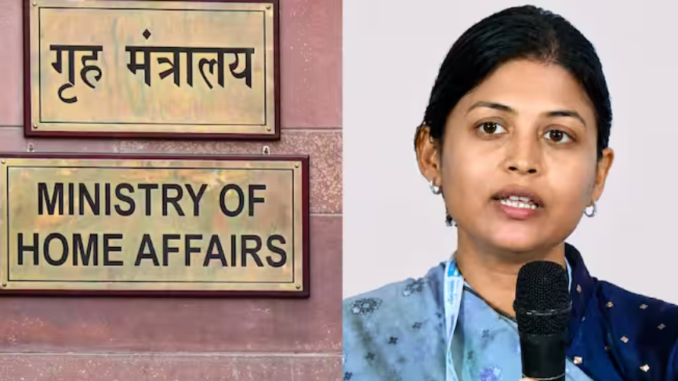
ArunachalPradesh: The Central Government has officially removed senior IAS officer Padma Jaiswal from service over allegations of financial irregularities dating back nearly two decades during her tenure in Arunachal Pradesh. The case, which has taken more than 16 years to reach this stage, is being viewed as one of the rare instances where such a severe disciplinary action has been executed against a serving IAS officer.
Who Is Padma Jaiswal?
Jaiswal, a 2003-batch Arunachal Pradesh-Goa-Mizoram and Union Territories (AGMUT) cadre officer, served as the Deputy Commissioner of West Kameng district in Arunachal Pradesh between 2007 and 2008, with her headquarters in Bomdila. In February 2008, residents filed a complaint accusing her of misusing her official position and diverting public funds. Following the allegations, she was suspended in April 2009, although the suspension was revoked in October 2010.
Arunachal Pradesh corruption case explained
A detailed probe by the Central Bureau of Investigation (CBI) later uncovered what investigators described as a deep criminal conspiracy involving Jaiswal and certain subordinate officials, including the then Financial Advisor and the office cashier. According to the investigation, treasury funds were systematically withdrawn in cash on a “returnable basis” under her direction.
The inquiry further revealed that three Government Deposit at Call Receipts (DCRs) were allegedly liquidated to generate multiple Demand Drafts amounting to Rs 28 lakh. Investigators alleged that the siphoned public money was subsequently used to purchase immovable properties registered in the names of her close relatives.
Based on these findings, the Ministry of Home Affairs initiated major penalty proceedings under Rule 8 of the All India Services (Discipline and Appeal) Rules, a provision invoked only in cases involving grave violations of official integrity and misconduct.
A departmental chargesheet had initially been issued against Jaiswal in 2009, but the inquiry concluded only recently. Investigators found evidence of misuse of public funds, abuse of official position, and violations of the All India Services Conduct Rules. The inquiry report stated that she failed to uphold the integrity standards expected of an IAS officer.
The Ministry of Home Affairs executed the major penalty of “removal from service” after the Union Public Service Commission (UPSC) recommended her ouster and the President granted final assent, officially ending her civil services career.
The prolonged timeline of the case, stretching from the original complaint in 2008 and chargesheet in 2009 to the inquiry’s conclusion in 2026, has drawn attention from legal and administrative observers. Many have raised concerns over the lengthy disciplinary process within the All India Services framework, especially in cases involving senior officers.
Leave a Reply