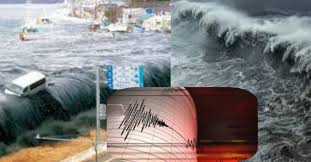
The number of fatalities from Tuesday’s magnitude 6.9 earthquake that hit the central Philippines has risen to 60, with over 140 injured. Wednesday, officials cautioned that the number of fatalities is bound to rise as rescue teams make their way to the collapsed buildings and remote areas.
The earthquake’s epicenter lay around 17 kilometers (10 miles) northeast of Bogo, a coastal city with a population of about 90,000 people, as per the United States Geological Survey (USGS). The earthquake, which was caused by a local fault line, resulted in extensive structural damage in several towns and villages.
Rescue Efforts Disturbed By Landslides
Bogo is one of the worst-hit areas, with at least 14 reported deaths to date. Rescue efforts are, however, severely hampered, especially in isolated mountain villages.
A landslide covering a group of shanties in one mountain village left the ground rough terrain for rescuers. Disaster-mitigation officer Glenn Ursal said travel in the region is problematic because of the dangers. Officials are deploying heavy equipment, such as backhoes, to remove boulders and earth in order to search for victims suspected trapped under the debris.
Tsunami Warning Lifted, Power Outages Widespread
After the strong tremor, the Philippine Institute of Volcanology and Seismology (PHIVOLCS) initially declared a tsunami warning, instructing people along the coastlines of Cebu, Leyte, and Biliran to move inland because of the possibility of waves reaching up to 1 meter (3 feet) high.
PHIVOLCS head Teresito Bacolcol subsequently declared that the warning had been removed because there was no abnormal wave movement.
The quake, which was preceded by a tropical storm, triggered widespread flooding, knocked down trees, and knocked out power in several towns. Dozens of thousands of residents have been taking refuge in evacuation centers.
The Philippines lies along the seismically active Pacific “Ring of Fire,” so it is one of the globe’s most disaster-prone countries, frequently struck by powerful earthquakes and some 20 large typhoons every year.
Bureau Report
Leave a Reply