It was from May 7th to May 9th when Pakistan launched a barrage of armed drones against India, targeting civilian areas. While India intercepted and neutralised most of the air-borne threats, the armed forces got a glimpse of future warfare. Indian armed forces are now aware that in case of a conflict with Pakistan, China and Turkey will supply a huge amount of drones and weapons to Islamabad and thus, New Delhi needs to be prepared.
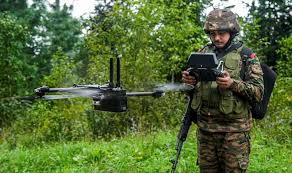
To counter the drone threats and train its soldiers in anti-drone and drone warfare, all three defence forces are taking part in the drone and counter-drone warfare drill codenamed Exercise Cold Start. The exercise is being held at military locations in Babina and Mhow in Central India and is being seen as an attempt to integrate the capabilities of the three forces in the domain. The drone and counter-drone drills involving the three forces are being carried out by the Integrated Defence Staff and will be witnessed by the Chief of Defence Staff, Gen Anil Chauhan, on one of the four days of the exercise.
Lessons From Op Sindoor
India carried out Operation Sindoor to target terror bases inside Pakistan, after which the Army there tried to hit Indian civilian and military targets both. The entire conflict saw both sides using drones to target each other. While the Indian drones, including both indigenous and imported ones, managed to cause heavy damage to Pakistani military and terrorist bases, Pakistani attempts to use Turkish and Chinese drones were thwarted successfully.
Following operations, the Indian forces are preparing for future conflicts, where they can tackle all threats in an integrated manner. Indian forces are also in the process of implementing the lessons learnt during Operation Sindoor in drone warfare.
Drone Kavach Drill
Earlier last month, Indian Army’s Spear Corps under Eastern Command conducted Exercise DRONE KAVACH in the forward areas of Eastern Arunachal Pradesh over a period of four days. The exercise conducted between September 25 and 28 showcased the Indian Army’s combat readiness for the next generation of drone warfare, besides validating state-of-the-art drone technologies and counter-drone systems.
As part of the exercise, a series of tactical manoeuvres and combat situations were exercised to validate the Indian Army’s preparedness for operating in a multi-domain technological-infused battlefield scenario.
Decisive Shift
The Indian Armed Forces’ renewed focus on integrated drone warfare marks a decisive shift in the country’s military preparedness. As conflicts evolve toward technology-driven engagements, India’s strategic readiness hinges on mastering both offensive and defensive drone capabilities. Exercises like Cold Start and Drone Kavach signal a clear intent to transform lessons from recent confrontations—such as Operation Sindoor—into actionable doctrine and real-time interoperability among the Army, Navy, and Air Force.
This holistic approach ensures that India is not only equipped to counter potential drone offensives from adversaries like Pakistan but also positioned to dominate the aerial domain in future hybrid conflicts. By investing in indigenous innovation, joint training, and rapid response mechanisms, New Delhi is building a deterrent framework that blends technology with tactical agility. Ultimately, India’s strategic trajectory now reflects a proactive, technology-first defense posture designed to secure its sovereignty and regional stability in an era defined by unmanned warfare.
Bureau Report
Leave a Reply