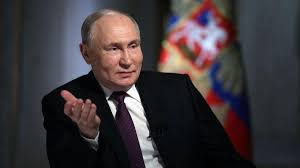
Russian: As Russian President Vladimir Putin readies for his latest swing through India, attention again is turning to the shadowy, highly exclusive club of loyalists that surrounds him. This inner circle, a small cohort of men referred to as the “Siloviki,” are the only ones considered trustworthy enough to stay near the Russian president and to play decisive roles in most major decisions.
The term Siloviki is a direct translation of “men of force” or “security men.” It generally means senior-ranking officials with previous experience in security agencies such as the KGB and who dominate in matters concerning national security and defense.
The Structure of Putin’s Elite
According to political analyst Tatyana Stanovaya, President Putin’s inner elite is broadly divided into two groups:
Technocrats: These persons often occupy government position but do not have any authority over security issues.
Siloviki: This group dominates almost every aspect of the agenda, especially those concerning Putin’s personal security and national defense.
Critics charge that the Siloviki are primarily responsible for shaping Putin’s hardline policies toward Ukraine and other European nations, and their views are said to have significantly colored nearly every major Kremlin decision in recent years.
Key Members of the Siloviki
The following are considered the most powerful and trusted members of Putin’s elite security circle:
1. Nikolai Patrushev (Security Council Chief)
Position: Head of the Security Council of Russia and considered the most powerful Silovik.
Background: A professional intelligence officer who has known Putin since the 1970s when they both worked in the KGB in Leningrad. He previously headed the FSB (Russia’s domestic intelligence agency).
Influence: Patrushev is known for his deeply anti-Western, conspiracy-theory views. He once claimed the US wished for Russia to cease existing as a country. He is believed to have played a key role in the 2016 coup attempt in Montenegro to prevent the country from joining NATO.
2. Sergei Naryshkin, Foreign Intelligence Chief
Role: Head of Russia’s Foreign Intelligence Service, or SVR, and a former KGB officer.
Background: Has known Putin since the 1990s, when the two men worked together in the St. Petersburg mayor’s office.
Influence: He is considered a loyalist and an effective administrator, and he has actively promoted a positive vision of Russian history-one of Putin’s most cherished projects. He has sometimes been advanced as a potential successor to the President.
3. Alexander Bortnikov: Director of FSB
Current Director of the FSB, the successor to the KGB. He controls a vast security apparatus responsible for everything from counter-terrorism to border security and electronic surveillance.
Background: Also worked with Putin in the Leningrad KGB during the 1970s.
Influence: He has a key role in sustaining Putin’s grip on the country, although his personal influence is thought to be less than that of Patrushev or Naryshkin.
4. Sergey Shoigu, Defense Minister
Role: Defense Minister, responsible for the modern-day Russian military and the aggressive GRU-a military intelligence agency.
Background: Unlike most Siloviki, he did not serve in the KGB or the military in the beginning. His position makes him both a technocrat and a Silovik.
Influence: Frequently involved in key security decisions. He and Putin have taken highly publicized hunting and shooting trips together in Siberia.
Experts noted he is a strong supporter of national interests, but does not have the deep anti-Western sentiment of other Siloviki members.
5. Valery Gerasimov (Chief of the General Staff)
Role: General of the Army and Chief of the General Staff.
Background: Experienced military strategist and an old-school Soviet general.
Influence: General Gerasimov was the architect of the Ukrainian invasion. He remains in his top military job, an indication that President Putin rewards veteran loyalty more than battlefield results.
The Unofficial Inner Circle
Beyond the formal security apparatus, Putin is also influenced by a circle of unofficial confidantes.
Yury Kovalchuk: A Russian elite with deep personal and family relations with Putin, tracing back to when Putin was Deputy Mayor of Leningrad.
Having never held a government post, he is highly influential and ideologically close to the President, according to Mikhail Zygar, author of All the Kremlin’s Men.
Anton Vaino: Chief of Staff of the Presidential Executive Office. He rarely appears in public, but he is one of Putin’s most trusted people, as an effective manager in charge of keeping the Kremlin administration in order and holding the bureaucracy in check.
Bureau Report
Leave a Reply