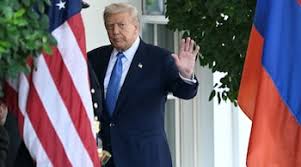
US President Donald Trump has kept global markets on edge since returning to the White House last year, using aggressive tariff measures to pressure trading partners into renegotiating trade deals with Washington.
During his first year back in office, Trump introduced a series of “reciprocal tariffs” on multiple countries, prompting several nations to rush into negotiations with the US.
US Supreme Court setback
The Trump administration’s tariffs faced a serious setback on February 20, when the Supreme Court of the United States, in a 6–3 judgment, ruled that President Trump overstepped his authority when he imposed global tariffs using the International Emergency Economic Powers Act (IEEPA).
After the Court’s orders, Trump announced a 10 per cent global tariff, later increasing it to 15 per cent by invoking Section 122 of the Trade Act of 1974. While it allows the US President to impose this import duty, it is a temporary adjustment for a maximum of 150 days.
This provision is meant to be used to address balance-of-payments deficits, and needs to be extended by Congress. However, with mid-term elections looming ahead this year, the House may not want to vote in a hurry.
Aftereffects of Trump’s tariff setback
The court ruling and subsequent tariff revisions have created uncertainty for businesses and trading partners, many of whom remain unclear about which tariffs apply. This has complicated long-term planning and weakened Washington’s negotiating position.
At the same time, several countries now believe they can renegotiate earlier concessions.
IANS cited the UK’s liberal-leaning ‘The Guardian’ newspaper, “After the US President tore up the global economic order in 2025, Japan was one among the countries scrambling to strike a deal. They pledged to dramatically increase investment in the US in exchange for lower US tariffs on Japanese exports.”
“But two days after Trump’s declared victory, his bid to reshape international trade suffered a damaging defeat at the US Supreme Court,” it added.
Meanwhile, India, Brazil, and China received tariff reductions without making fresh concessions, while countries such as the UK may now face higher tariffs despite earlier compromises.
The IANS report stated New Delhi has paused ongoing trade negotiations with Washington, while the European Union is seeking clarifications after preliminary understandings with the US. Brussels is also considering consulting the World Trade Organisation (WTO) and has warned of possible countermeasures.
Meanwhile, Chinese President Xi Jinping is expected to hold stronger bargaining chips in talks with Trump during the latter’s planned Beijing visit from March 31 to April 2.
Washington may now find it harder to press China for increased purchases of American soybeans, Boeing aircraft, and energy exports. In turn, Beijing may go slow on allowing a steady flow of rare earth minerals, a crucial component of the American hi-tech and AI-based manufacturing.
Bureau Report
Leave a Reply