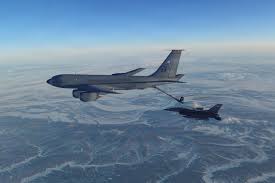
The US aerial refueling force, the backbone of “Operation Epic Fury,” was dealt two blows on Friday: confirmation of the death of six US servicemen in a mid-air tragedy over Iraq, and the news that an Iranian missile attack successfully damaged five US aircraft stationed in Saudi Arabia.
Tragedy over Iraq: Mid-air incident claims lives
The US Central Command (CENTCOM) confirmed that all six crewmen on board the KC-135 Stratotanker were killed after an incident involving another aircraft in western Iraq on Thursday.
Non-hostile cause: Although the “Islamic Resistance in Iraq” claims responsibility for shooting down the aircraft, the Pentagon said the loss was not due to enemy fire or friendly fire.
The incident: According to Reuters, the second aircraft, which managed to land safely, was also a KC-135 Stratotanker. The incident highlights the extreme danger of high-density aerial refueling missions necessary for long-range attacks against Iran.
The toll: The loss of these six US servicemen brings the total US servicemen killed in the conflict to 13 since operations began on February 28.
Iranian missile strike damages five US Air Force refueling planes
While accidental tragedies filled the skies over Iraq, a direct attack slammed into Saudi Arabia. The Wall Street Journal reports that a recent Iranian missile attack on Prince Sultan Air Base damaged five US Air Force refueling planes.
Damage assessment: Two US officials confirmed that the five US Air Force refueling planes were damaged, although not completely destroyed. Repairs are currently ongoing.
Strategic impact: The targeting of oil tankers is part of a strategic Iranian plan to ground US fighters by removing their ability to refuel in flight, thus reducing the range of US-Israeli flights.
‘War is Hell’: Pentagon vows to press on
Speaking at the Pentagon, Defense Secretary Pete Hegseth admitted that the losses are rising but vowed that the administration would achieve its objectives.
“War is hell. War is chaos,” Hegseth said to reporters. “As we saw yesterday with the tragic crash of our KC-135 tanker, terrible things can happen. But operations against Iran will continue.”
The US Air Force uses the KC-135, built by Boeing in the 1950s and 1960s, as its main workhorse. The conflict in 2026, however, is pushing these vintage airframes and their crews to the breaking point.
Mounting casualties in the 2026 conflict
The latest air crash and the missile strikes are part of an increasing number of US casualties in the conflict as Tehran and its proxies strike back at US-Israeli air raids:
Wounded in action: As many as 150 US troops have been wounded in action.
Naval incidents: A non-combat fire on the USS Gerald R. Ford wounded two US sailors.
Regional risk: The previous casualties happened in Kuwait at Port Shuaiba and in Saudi Arabia, thus proving that no US base in the region is safe from Iranian reprisals.
President Donald Trump has warned the American public that they should expect more US military casualties in the conflict with Iran, which is in its third week.
Bureau Report
Leave a Reply