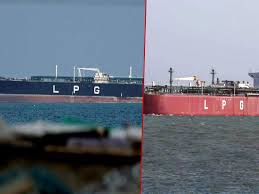
In a significant respite for the energy sector of India, the LPG vessel Nanda Devi has safely docked at the Vadinar Port in Gujarat on Tuesday morning, i.e., March 17. The vessel has carried around 47,000 metric tonnes of liquefied petroleum gas. This marks the second success for an Indian vessel in traversing the dangerous Strait of Hormuz this week.
Strategic diversion of the vessel to Vadinar Port
The vessel was originally scheduled for docking at the Kandla Port but has been diverted for priority unloading at the Vadinar Port. This comes after the safe docking of its sister vessel, the Shivalik, at the Mundra Port on Monday night with a similar cargo of 46,000 metric tonnes of LPG.
The combined efforts of the two vessels have resulted in the transportation of more than 92,700 metric tonnes of LPG cargo. This is roughly the equivalent of one day’s requirement of the national import requirement for the entire nation. It has also been noted that out of this cargo, 24,000 metric tonnes are already earmarked for transportation to the state of Tamil Nadu.
Gujarat | LPG tanker Nanda Devi arrives at Vadinar (Jamnagar) port carrying 46,500 MT LPG for ship-to-ship transfer at the anchorage. STS transfer to MT BW Birch to commence today. Sushil Kumar Singh, Chairman of the Deendayal Port Authority (DPA).
Safety of Indian seafarers in the Persian Gulf
The passage of the vessel has been facilitated by the combined efforts of the Indian and Iranian Navies. After the safe passage of the Shivalik and Nanda Devi vessels out of the Strait of Hormuz, government data has confirmed the following facts:
- 22 Indian-flagged vessels are still west of the Strait of Hormuz.
- 611 Indian seafarers are currently onboard these remaining ships.
- All personnel are safe, and there have been no untoward incidents in the last 24 hours.
In addition to this, the crude oil tanker Jag Laadki is currently en route to Mundra Port with an onboard cargo of 81,000 tonnes of Murban crude oil originating from the UAE.
The crisis in the Hormuz chokepoint
India’s energy security situation is in severe crisis following the escalation of the US-Israel-Iran conflict on February 28. This resulted in the de facto closure of the Strait of Hormuz. India relies heavily on this critical energy route for the supply of energy resources:
- 88% of its crude oil requirements.
- 60% of its LPG requirements.
- 50% of its natural gas requirements.
Although India has successfully rerouted its crude oil requirements to Russia, the lack of gas supplies in recent times forced curtailment in gas supplies to commercial establishments such as hospitality and heavy industries.
Diplomacy over disengagement
In this backdrop, External Affairs Minister S. Jaishankar claimed that direct dialogue with Iran resulted in the success of these transits. He recently claimed in a statement that “Reasoning and coordinating” with the Iranian side has been “more effective” in comparison to a “blanket arrangement” or relying solely on Western military escorts. This is seen as a “political lifeline” for the current government as it tries to deal with the fuel crisis and long lines outside gas agencies.
Bureau Report
Leave a Reply