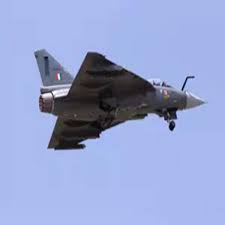
The Ministry of Defence on Thursday inked a Rs 62,370 crore contract with Hindustan Aeronautics Limited (HAL) for the procurement of 97 LCA Mk1A aircraft for the Indian Air Force, comprising 68 single-seat fighters and 29 twin-seat jets, along with necessary equipment. Deliveries are scheduled to begin in 2027-28 and will be completed over six years, strengthening the operational capabilities of the IAF.
The LCA Mark 1A is the latest and advanced version of India’s indigenously developed Tejas Light Combat Aircraft, and will feature more than 64% indigenous content, including 67 new components beyond the earlier Mk1A contract signed in January 2021. Advanced indigenous systems such as the UTTAM AESA Radar, Swayam Raksha Kavach, and control surface actuators will be integrated, further boosting India’s Aatmanirbhar Bharat initiative. The project is supported by a network of around 105 Indian companies actively contributing to its development.
The contract is expected to provide a major boost to India’s fighter fleet, helping fill gaps created by the phased retirement of older aircraft. With the retirement of 36 MiG-21 jets, the Indian Air Force (IAF) will be reduced to a record low of 29 fighter squadrons, each comprising 16–18 aircraft.
This move follows the internal assessment by the IAF after Operation Sindoor, during which Pakistan deployed Chinese-origin J-10 jets equipped with PL-15 missiles having a range of over 200 kilometers. The evaluation indicated that even the sanctioned strength of 42.5 squadrons may be insufficient to effectively counter complex and coordinated threats from adversaries.
‘Made in India’ Rafale Jets
Recently, the Defence Ministry began discussions on a proposal from the IAF to acquire 114 Rafale fighter jets manufactured in India. These jets are to be produced by Dassault Aviation in partnership with Indian aerospace firms.
The proposal follows the Rafale jets’ commendable performance during Operation Sindoor, where they reportedly neutralized threats from Chinese PL-15 air-to-air missiles using the aircraft’s Spectra electronic warfare system.
From Pahalgam Terror Attack to Operation Sindoor
Operation Sindoor, carried out on May 6–7, was a retaliatory strike in response to the April 22 Pahalgam terror attack. In a large-scale overnight operation, the Indian Armed Forces targeted nine terror facilities across Pakistan and Pakistan-occupied Kashmir, inflicting significant damage on the infrastructure of terrorist organizations Jaish-e-Mohammed (JeM) and Lashkar-e-Taiba (LeT). Reports indicate that over 100 militants were killed during the offensive.
Bureau Report
Leave a Reply