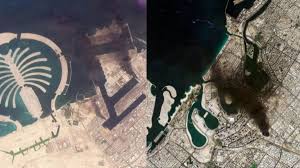
Newly released satellite images over the weekend show plumes of black smoke rising over parts of Dubai, providing some of the clearest visual evidence so far of the effects of Iran’s ongoing retaliatory strikes in the Gulf.
Satellite images taken on March 1 show columns of smoke over major coastal and urban areas, including Jebel Ali port and the Palm Jumeirah, after a large-scale attack by Iranian drones and missiles on US assets and regional allies.
Satellite imagery highlights how dramatically the situation has shifted in just a few days. Images from February 24 showed Dubai’s uninterrupted skyline, orderly highways, and normally functioning artificial islands. By March 1, however, dark smoke plumes and burn zones were visible from space, an unusual sight for a city long seen as shielded from regional conflict.
As per the UAE authorities, dozens of aerial attacks were launched towards the country, with most intercepted by UAE air defense systems. However, debris from the intercepted projectiles caused fires and damage at several sites in Dubai, including port-related infrastructure and surrounding commercial areas.
Local authorities confirmed that fires erupted at Jebel Ali port after debris from an aerial interception ignited facilities. Similar incidents were reported in areas of Palm Jumeirah and near prominent hotels. Dubai Airport and other key infrastructure faced disruptions as emergency measures were implemented.
The retaliatory strike by Iran after the US-Israeli joint military action earlier on Saturday, escalating the wider geographical conflict across West Asia. So far, three people have been killed and several others injured ever since the attacks started, as per the officials.
Over the years Dubai has evolved as a stable hub for business and lifestyle in a highly volatile Middle East. Approximately 90% of its populations made up of expatriates. However, the recent missile interceptions, explosions, and plumes of smoke over luxury waterfront areas have shaken that image, despites authorities assurance that defense systems prevented more extensive damage.
These latest satellite images highlight a harsh reality growing across the Gulf: the region’s economic centers are no longer insulated from escalating military conflicts.
Bureau Report
Leave a Reply