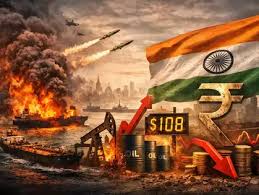
The fire of Middle East tension is poised to flare up in India soon. The United States and Israel’s coordinated assault against Iran has resulted in Tehran choking the Strait of Hormuz. More than 20% of the world’s seaborne oil trade passes through this route. Notably, oil exports from major producers, such as Saudi Arabia, Iraq, the United Arab Emirates, and Kuwait, transit through this passage. Besides this, most of Qatar’s LNG (Liquefied Natural Gas) exports also move through this route.
India is aware of what is at stake and thus, the government has reporedly prepared a contigency plan to shield Indians from the price rise of key commodities, including petrol, diesel and LPG.
According to an Economic Times report, India is considering options like restricting petrol and diesel exports and increasing its crude import from Russia. To keep LPG prices in check, the government is planning to introduce LPG rationing to address potential fuel shortages if the Strait of Hormuz remains choked.
US President Donald Trump has stated that the war could linger on for four weeks and thus, the market prices are bound to get hit. India’s oil minister Hardeep Puri said on X that the government is monitoring the situation.
“We are continuously monitoring the evolving situation, and all necessary steps will be taken in order to ensure availability and affordability of major petroleum products in the country,” said Puri.
The Ministry of Petroleum held a review meeting on Monday amid the ongoing geopolitical developments in the Middle East and discussed the supply situation for crude oil, LPG, and other petroleum products.
Oil and gas prices surged on Monday. Brent crude rose nearly 10%, reaching $80 per barrel. European gas prices jumped more than 40%. The spike followed the widening West Asia conflict. Energy facilities were attacked, including Saudi Arabia’s Ras Tanura refinery and a Qatari LNG plant. These attacks led to production shutdowns.
Tanker movement through the Strait remained limited for a second day. This raised concerns about supply continuity. Officials and refiners began reviewing backup options. Industry executives and oil ministry officials are assessing supply and demand management measures.
Since 85-90% of India’s LPG comes from the Gulf, the government is also working to stabilise the LPG supply chain.
According to the report, existing reserves — including storage on land and shipments that have already passed through Hormuz — may last for less than two weeks if fresh supplies stop.
In response, state-owned refiners such as Indian Oil, HPCL, and BPCL have started raising LPG production at selected integrated petrochemical refineries.
Officials are also weighing demand-control measures. These may include limiting LPG supply for consumers who can switch to alternative fuels, especially in rural regions.
Increasing purchases of Russian crude to offset possible Gulf disruptions is another option under review. Large volumes of Russian oil are currently at sea and could be redirected quickly if required.
If global supplies become tighter and prices surge significantly, the United States may adopt a more flexible approach, potentially allowing Indian refiners to import higher volumes of Russian oil.
Bureau Report
Leave a Reply