The US-Iran war has entered its 20th day and it has brought only bad news. Neither Iran nor Israel-US are ready to step back from what is now taking shape as a global crisis. The unprovoked attack against Iran has now embroiled entire Gulf nations, making the global markets unstable. The oil and gas prices are skyrocketing, and the war-induced shortage is hurting developing economies. Even countries like China and India are bearing the brunt of the war, with Iran choking the supplies via the Strait of Hormuz.
While Iran is fighting for its sovereignty, it very well knows and understands the consequences of its actions, be it of attacking Gulf nations or blocking/regulating the Strait of Hormuz. Iran knows that America will attack again if a premature ceasefire is reached to end the war. Iranian officials have time and again confirmed that they are ready for a long-term war and will look to inflict as much damage as they can upon Israel and the United States. They have also demanded reparations from the United States for damages caused to Iran.
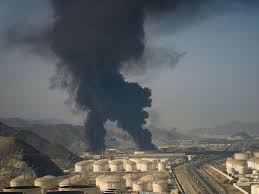
Iran has not only targeted US bases in the Gulf but also hit airports, ports, oil facilities, and commercial centres. Iran has also struck oil refineries in Saudi Arabia, targeted shipping near the UAE, and threatened multiple energy installations across the Gulf. The pattern suggests a deliberate widening of the conflict’s geography. Gulf nations have warned that Iran has crossed all red lines. Abdulaziz Sager, chairman of the Saudi-based Gulf Research Center, said in a recent interview with Reuters that at first, the Gulf nations were against the war and backing Iran. “There is a wide feeling across the Gulf that Iran has crossed every red line with every Gulf country…Once they began directing strikes at us, they became an enemy,” he said.
Saudi Arabia’s Foreign Minister Prince Faisal bin Farhan Al Saud has also warned Iran, asking Tehran to recalculate its strategy. “The patience that is being exhibited (by Gulf nations) is not unlimited,” he said.
The UAE has also been forced to halt operations at key gas facilities in Abu Dhabi following missile debris, highlighting how vulnerable the region’s energy backbone has become. The attack on Qatar’s Ras Laffan LNG production facility, one of the world’s most critical hubs, has also irked Doha. Later, Qatar issued a strongly worded statement.
“The State of Qatar condemns in the strongest terms the Iranian targeting of energy facilities in the Kingdom of Saudi Arabia and the United Arab Emirates over the past two days, deeming it a blatant violation of international law and a serious threat to global energy security, navigation, and the environment. The Ministry of Foreign Affairs affirms that Iran’s brutal attacks on countries in the region have crossed all red lines by targeting civilians, civilian objects, and vital facilities, stressing the need to spare the region the consequences of these unjustified attacks and to work towards de-escalation to restore regional and international security and stability,” said Qatar’s Ministry of Foreign Affairs in a statement.
Later, a Consultative Ministerial Meeting of the Foreign Ministers of a Group of Arab and Islamic countries were held and they issued a joint statement regarding the Iranian attacks. The meeting was attended by officials/rulers/Ministers of Qatar, Azerbaijan, Bahrain, Egypt, Jordan, Kuwait, Lebanon, Pakistan, Saudi Arabia, Syria, Türkiye and the United Arab Emirates.
The nations stressed the right of states to defend themselves and called on Iran to immediately halt its attacks and affirmed the necessity of respecting international law. “The Ministers further emphasised that the future of relations with Iran depends on respecting the sovereignty of states and non-interference in their internal affairs, as well as refraining from violating their sovereignty or their territories in any manner whatsoever, and not using or developing its military capabilities to threaten countries of the region,” said the statement.
Even US President Donald Trump was taken aback by the escalation, stating that “we were shocked” when Iran began striking American allies in the Gulf. His reaction underscores how the conflict may be evolving in ways even Washington did not fully anticipate.
Iran’s war strategy now looks clearer. It’s targeting Gulf nations, and that can drag them into the war as well. Notably, the Gulf nations have already started reacting harshly against the Iranian attack.
While Gulf nations have tried to avoid direct confrontation with Iran, the logic may lie in escalation. By hitting energy infrastructure across Gulf states, Iran is effectively raising the stakes for everyone involved. The reaction of Gulf nations clearly shows that their restraint has certain limits. If Iran continues similar attacks, the Gulf nations will have no other option but to join the assault against Tehran.
The Gulf nations have reportedly warned that in case the US leaves the war before the task is finished, the region will be left to deal with Iran alone. “If the Americans pull out before the task is complete, we’ll be left to confront Iran on our own,” Sager said.
Notably, the Gulf nations are not just regional players but are central to global energy supply. Any disruption immediately pushes oil and gas prices higher and will send shockwaves through global markets. By achieving that, Iran will manage to transform a regional conflict into a global economic concern.
Since the Gulf nations host the US military assets and by targeting them, Iran may be trying to force a choice – either join the war or push America to de-escalate.
Interestingly, early signals suggest both pressures are emerging simultaneously. While all Gulf nations have condemned the attacks strongly, there is also growing concern within the grouping about the risks of prolonged war to their oil economy.
Iran’s regulation of the Strait of Hormuz also builds pressure on the Gulf nations. By threatening these lifelines, Iran gains leverage far beyond the battlefield. Rising energy prices create pressure not just on regional governments, but on major economies across Europe and Asia that depend on Gulf supplies.
Iran’s strikes on Gulf energy infrastructure suggest a calculated attempt to reshape the conflict. By drawing in economically vital but militarily cautious Gulf nations, Tehran may be trying to internationalize the crisis—and in doing so, compel the world to act.
Bureau Report
Leave a Reply