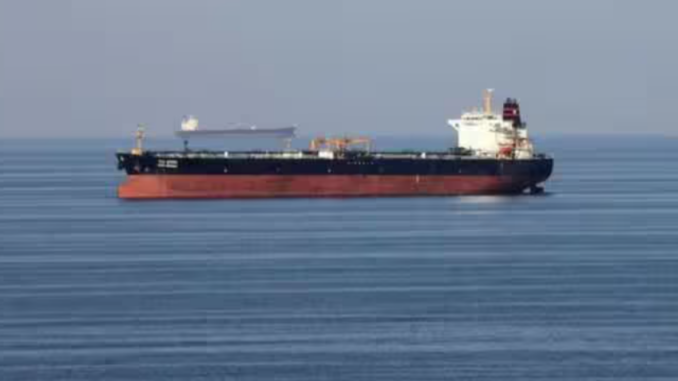
Iran: The status of the Strait of Hormuz, one of the critical global oil chokepoint remains highly uncertain, as conflicting signals from Iran and the United States continue to disrupt global shipping. Despite brief reports over the weekend suggesting the waterway had reopened, renewed military threats, an ongoing US naval blockade, and direct attacks on vessels have once again brought maritime traffic to a standstill.
The confusion began on April 18, when Iran’s foreign minister announced that the Strait of Hormuz was “completely open,” prompting a surge of vessels attempting to exit the Persian Gulf. For a brief period, some ships did manage to pass through, with more than 20 crossings recorded that day, the highest number since early March.
But the strait quickly closed as Iran reversed its position after Washington made clear that its naval blockade on Iranian shipping would continue. In response, Tehran reimposed restrictions, declaring that no vessels would be permitted to pass while its own exports remained blocked.
“Iran is determined to maintain oversight and control over traffic,” its top security body said, effectively reinstating a closure.
Two Indian ships were targeted while their passage via Hormuz
The already fragile situation worsened further as vessels came under direct attack. Two Indian ships were fired upon while in transit, forcing them to turn around.
In one instance, armed boats approached a tanker near Iran’s coast and opened fire, prompting an emergency U-turn. Other vessels, after hearing gunfire over radio channels, abandoned their journey altogether.
By Sunday, no vessel crossings were recorded, with at least 13 oil tankers turning back and many others opting to remain anchored rather than risk transit.
Iran and US using Hormuz as the bargaining chip
For the United States, the naval blockade is intended to pressure Iran economically and compel concessions in ongoing negotiations over its nuclear programme and regional activities.
For Iran, restricting access to the Strait of Hormuz serves as a potent countermeasure, capable of disrupting global markets and increasing political pressure on Washington.
Iranian officials have made it clear that if their vessels are not allowed to operate freely, they will ensure that others cannot do so either.
Question looms, is the Strait open or not?
Although neither side has announced a formal or permanent closure, a mix of ongoing military threats, direct attacks on vessels, contradictory political signals, and the continuing US blockade has effectively made the waterway unusable for commercial traffic.
However, the IRGC Navy said in a statement on Saturday that Iran had closed the Strait of Hormuz after the United States allegedly continued its naval blockade.
Shipping companies are reluctant to risk their vessels and crews under such volatile conditions, leaving the strait, for now, effectively closed.
Why Hormuz matters
The stakes are extremely high. Nearly one-fifth of the world’s oil supply typically passes through the Strait of Hormuz, making it a critical route for global energy markets.
As a result of closure, millions of barrels of crude oil and liquefied natural gas are now effectively stranded within the Persian Gulf. An estimated 135 million barrels of oil remain stuck on tankers unable to exit.
This disruption risks worsening an already fragile global energy situation, with producers hesitant to increase output until existing shipments are cleared.
Iran’s Khatam al-Anbiya military headquarters has confirmed that a US attack targeted an Iranian commercial vessel in the Sea of Oman, according to a statement reported by Iran’s state-run Tasnim Agency.
Bureau Report
Leave a Reply