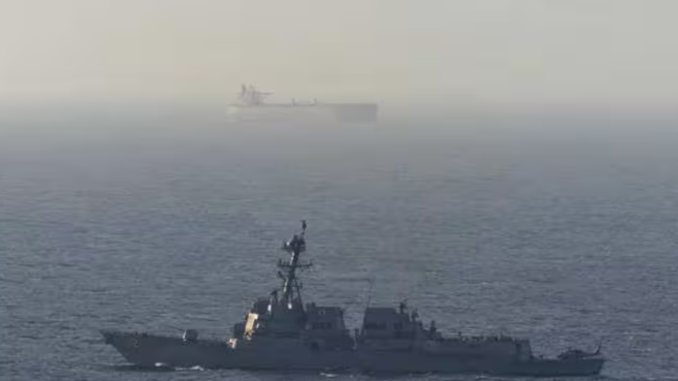
Iran: The Strait of Hormuz will remain closed, announced Iran’s chief negotiator Mohammad Bagher Ghalibaf late Wednesday. Ghalibad said that it’s not possible for Iran to open the Strait of Hormuz due to the ‘blatant violations of the ceasefire’ by the United States and Israel. Amid the blockade of Hormuz by Tehran and the United States’ blockade of Iranian ports, Pakistan is scrambling to revive the peace talks, which have gone on the back burner for now.
Is Strait of Hormuz open?
Iranian Parliament Speaker Mohammad Bagher Ghalibaf said in a post on X that violations of the ceasefire include the United States’ naval blockade and it’s not possible for the Strait of Hormuz to remain open.
“A complete ceasefire only makes sense if it is not violated by the maritime blockade and the taking of the world’s economy hostage, and if the Zionist warmongering across all fronts is halted; reopening the Strait of Hormuz is impossible with such a flagrant breach of the ceasefire. They did not achieve their goals through military aggression, nor will they through bullying. The only way forward is to recognise the rights of the Iranian nation,” said Ghalibaf.
Iran’s President Masoud Pezeshkian said that Tehran is open to negotiations but maintained that ‘breach of commitments, blockade and threats’ remain obstacles in resuming the second round of peace talks.
Will the US-Iran war resume?
US President Donald Trump on Tuesday unilaterally extended the Iran ceasefire with no deadline. White House Press Secretary Karoline Leavitt said that President Trump is happy with the US naval blockade against Iran and knows that Tehran is in a ‘very weak’ position. The US is of the opinion that the war-torn Iran cannot bear the economic impact of the naval blockade for long and will ultimately come to the table for talks.
However, there are fears that Iran may resume its strikes against US assets as the ceasefire has been unilaterally extended by Trump.
Islamabad under lockdown
Pakistani Army Chief Asim Munir has announced the closure of certain parts of Islamabad where the peace talks venue is located. Notably, despite Iran’s refusal to travel to Islamabad and the subsequent postponement of the US delegation’s visit, the city remains closed for security purposes. This is affecting the local economy and residents who are already hit by high inflation and rising oil prices. The city is under partial lockdown as people are working from home, public transport is shut and businesses closed.
With Trump saying that a deal with Iran is still possible in the next few days, Islamabad still waits for the Iranian and American representatives. The banners are still up and the hotel where talks were expected to take place is empty. Analysts says that the talks could have gone as planned had it not been for the US navy’s blockade of the Iranian ports.
Pakistani Prime Minister Shehbaz Sharif posted on social media that Islamabad would ‘continue its earnest efforts for negotiated settlement of the conflict’. But no one is talking about opening the city to ease the lives of citizens.
War of blockades
On the other hand, while everyone was expecting the US and Iran to reach a deal and open the Strait of Hormuz, they have had more blockades. On Wednesday, Iran briefly seized two cargo ships in the Strait of Hormuz, and later the ships returned to their respective ports with no permission to cross the strait.
As Iran continues to choke the Strait of Hormuz, the US Navy has blocked all ships leaving from the Iranian ports carrying oil and other goods. Iran has accused the US of taking hostage the world economy by blocking Iranian exports.
Bureau Report
Leave a Reply