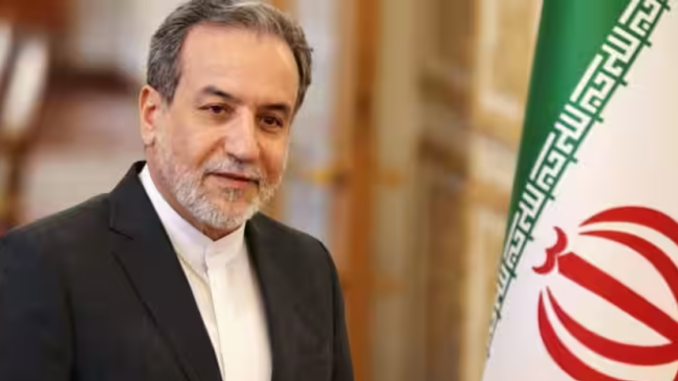
Pakistan: Iran has reportedly offered a “new proposal’ to the US via Pakistan to end the war. In a significant diplomatic move aimed at de-escalating regional tensions, Tehran has submitted a new proposal to Washington through Pakistani intermediaries. According to a report by Axios, the Iranian offer outlines a framework to reopen the Strait of Hormuz and bring an end to the war, signalling a potential breakthrough in the protracted conflict.
The initiative comes at a time when peace talks have remained stalled. US President Trump recently said that Tehran could “call” Washington should it wish to negotiate, while maintaining his firm stance that Iran must never acquire nuclear weapons.
The momentum for direct talks appeared to stall after the White House cancelled a scheduled visit to Islamabad by envoys Steve Witkoff and Jared Kushner.
The decision was widely seen as a sign of Washington’s dissatisfaction with Tehran’s earlier offer, further complicating efforts to reach a resolution.
At the heart of the current impasse is the US demand that Iran halt uranium enrichment for a minimum of ten years and move its existing nuclear stockpile abroad.
However, Iran’s Foreign Minister Syed Abbas Araghchi told mediators over the weekend that there is currently “no consensus within the Iranian leadership” on how to respond to these demands.
Iran’s new proposal to end war: Three key points
The new framework delivered via Pakistan suggests a “two-stage plan” that seeks to address the maritime crisis and the US naval blockade as a priority.
This latest proposal envisions either a “prolonged period” of ceasefire extension or a “permanent end to the war.”
Under the proposal, nuclear discussions would only begin at a later stage, specifically after the Strait of Hormuz is reopened and the US naval blockade is lifted.
The three key points of the proposal include:
- The new proposal sent by Iran to the United States aims to reopen the Strait of Hormuz, whose closure has worsened the global energy crisis, end the war, and postpone nuclear talks, according to a report citing a US official and two other sources.
- As part of the deal, the current ceasefire would either be extended for a longer period or Tehran and Washington would agree to a permanent end to hostilities.
- Nuclear negotiations would only begin at a later stage, once the Strait of Hormuz is reopened and the US naval blockade on Iranian ports is lifted, Axios reported.
While Axios reports that the White House has officially received the proposal, it remains unclear whether the United States is willing to engage with it.
In recent days, Abbas Araghchi has been engaged in shuttle diplomacy between Pakistan and Oman, and is scheduled for further high-level talks with Vladimir Putin in Russia on Monday. This regional outreach comes as the American leadership remains sceptical of long-distance diplomacy.
Trump cancels US envoys trip to Islamabad
On Sunday, President Trump, after calling off the US envoys’ trip to Islamabad, said, “I see no point in sending them (US negotiators) on an 18-hour flight in the current situation. It’s too long.” He further added, “We can do it just as well by telephone. The Iranians can call us if they want. We are not gonna travel just to sit there.”
Despite a cessation of full-scale combat following US-Israeli military strikes on February 28, a formal peace treaty has yet to materialise. The ongoing conflict has resulted in significant global economic instability, apart from numerous casualties.
Meanwhile, Tehran continues to use its strategic position over the Strait of Hormuz, which oversees approximately 20 per cent of global oil, as leverage. While the US maritime blockade of Iranian ports continues to drive “price spikes and market volatility.”
Iran has maintained that the US must first eliminate “obstacles,” most notably the naval blockade, before substantive talks can take place. The Iranian position also includes requests for “compensation,” a revised “legal framework governing the strait,” and assurances against future military intervention.
The US remains focused on forcing Iran to scale back its “nuclear ambitions,” missile development, and ties to regional groups. These conflicting priorities illustrate the “wide gaps” that continue to divide the two nations as they navigate this fragile diplomatic opening.
Bureau Report
Leave a Reply