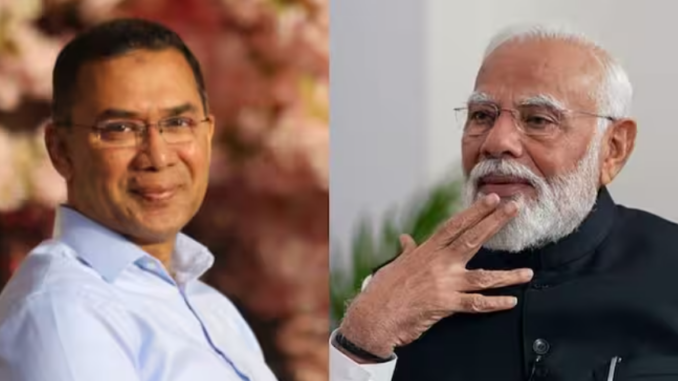
WestBengal: BJP’s landslide victory in the 2026 West Bengal Assembly elections, securing 206 seats of 294 seats, defeating TMC’s Mamata Banerjee after 15 years in power. This West Bengal elections has a significant implications for Bangladesh, given shared borders, migration issue, trade, water issue, and cultural ties.
West Bengal shares a long land border with Bangladesh (approx. 2217 km, which is over half of the total India-Bangladesh border). Politics there directly affect ground-level relations even though foreign policy is handled by New Delhi. The “double engine” government (BJP at both Centre and state) likely to remove earlier friction from TMC rule.
Key potential impacts
Border security, migration, and “infiltrators” rhetoric
BJP’s campaign heavily emphasized stopping illegal immigration from Bangladesh, stricter border fencing and enforcement, and narrative around demographic changes. With victories in border districts for instance Cooch Behar and alignment with BJP-ruled Assam, expect: 1) Increased pushbacks (“push-ins”) of undocumented migrants, 2) Stronger enforcement of citizenship checks (e.g., references to NRC/CAA), 3) Heightened surveillance and possible disruptions to cross-border movement.
These possible outcome has already raised alarm in Dhaka, with some MPs warning of a potential refugee crisis or economic strain if large numbers of illegal migrants are deported.
Water sharing issue (Teesta and others)
This is seen as a major positive factor for Bangladesh. TMC had blocked the 2011 Teesta water-sharing agreement. With BJP in power in Bengal, the Centre faces fewer state-level obstacles. Progress on Teesta could build trust and help renew the Ganges treaty. This is seen as a litmus test for improved ties.
Trade, connectivity, and economic ties
Smoother cooperation on customs, border trade, roads, and transit (important for India’s Northeast and Bangladesh’s development). There is the possibility of boost to bilateral trade and infrastructure if state-level hurdles decrease.
Communal dimensions
Concerns are likely to persist in Bangladesh over rising communal rhetoric, including anti-Muslim and anti-Bangladesh narratives, as well as their potential impact on Hindu minorities. There are fears that such tensions could trigger backlash or be exploited by local groups, further straining social harmony.
Dhaka’s official position is that relations with India remain unaffected by state polls. With BJP already in power at the Centre, this is more about alignment than a total shift. Opportunities exist for pragmatic cooperation (water, trade, security), especially as Bangladesh under the current BNP leadership seeks to normalise ties post-Hasina era.
Risks include escalation from campaign rhetoric, border incidents, or domestic politics mirroring across borders. India must balance security concerns with avoiding pushing Bangladesh closer to China.
Leave a Reply