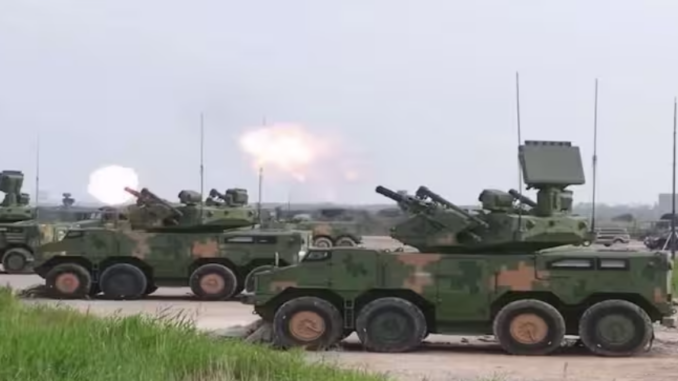
NewDelhi: Pakistan has moved to strengthen its air defence network by purchasing China’s Type 625E short-range system, a platform built mainly to counter drone attacks and low-flying aerial threats. The move comes after concerns inside Pakistan over damage caused by Indian drone strikes during Operation Sindoor.
According to a report by Defense Security Asia, the new Chinese system is expected to become part of Pakistan’s integrated air defence in the coming days. Neither Islamabad has officially announced details of the deal with Beijing, nor has the Inter-Services Public Relations (ISPR), the media wing of the country’s military, issued any confirmation.
The report said the lack of official confirmation from the ISPR has created uncertainty over the number of systems being purchased, delivery timelines and the exact configurations involved in the agreement. Even so, defence observers see the move as part of Pakistan’s effort to modernise its air defence structure with Chinese military systems.
Pakistan has inducted Chinese-made HQ-9/P and LY-80 air defence systems in recent years. The addition of the Type 625E is expected to strengthen Pakistan’s ability to deal with smaller aerial threats, especially drones and low-altitude attacks.
Built to counter drone swarms
The Type 625E is described as a highly mobile and modern air defence platform developed to target drone swarms, helicopters, low-flying fighter aircraft and cruise missiles.
One of the main features of the system is its large six-barrel Gatling gun mounted on the platform. It is capable of firing a high volume of rounds within seconds, allowing it to engage small drones and swarm attacks that are difficult to intercept using conventional systems.
Military experts say drone warfare has become an increasingly important part of modern battlefield tactics, especially after recent wars showed how low-cost drones can damage expensive military equipment and radar systems.
The system also carries missile launchers mounted on both sides of the turret. These are usually equipped with short-range missiles such as the FN-16 or FB-10.
These missiles can reportedly engage aerial targets at distances ranging from six to ten kilometres. This allows the Type 625E to create a protective layer against aircraft and drones flying at lower altitudes.
Radar, thermal cameras and rapid mobility
The Chinese system is also fitted with foldable radar mounted on the upper section of the platform. It is built to detect incoming aircraft or drones from a distance before locking onto the target and guiding the attack.
Apart from radar tracking, the Type 625E is equipped with thermal cameras and laser rangefinders. These features allow the system to continue tracking and attacking targets even if enemy forces attempt to jam or disable the radar using electronic warfare techniques.
Defence analysts say this capability is becoming increasingly important as electronic jamming and signal disruption are now widely used in modern combat situations.
The entire system is mounted on an 8×8 armoured military truck, allowing it to move across rough terrain and desert regions. This mobility is viewed as a major advantage for rapid deployment during active combat situations or emergency air defence operations.
Leave a Reply