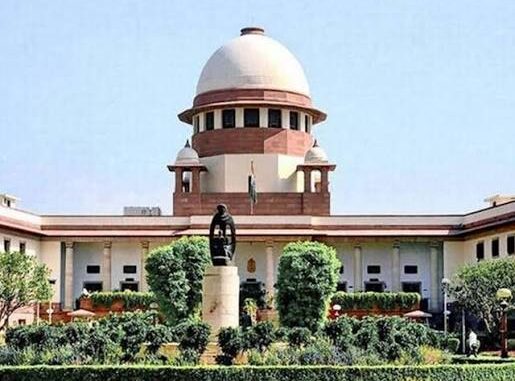
The Supreme Court on Tuesday directed all States to release students below the age of 18 who were arrested or detained during the nationwide protests over the alleged NEET-UG 2026 paper leak, provided they do not have any criminal antecedents.
The Court also ordered that no coercive action be taken against students for the time being, directed authorities to preserve all electronic evidence related to the protests, and observed that the allegations placed before it prima facie justify an independent and impartial investigation.
Release of detained students ordered
“All States are directed to release children below the age of 18 who have been arrested or detained during the student protests and who do not have any criminal antecedents,” the Court said.
It further directed that adults arrested in connection with the protests, who also have no criminal antecedents, should be released while allowing investigations in the cases to continue in accordance with law.
Bench hearing petitions on alleged police excesses
The directions were issued by a bench comprising Chief Justice of India (CJI) Surya Kant, Justice Joymalya Bagchi and Justice V. Mohana while hearing a batch of petitions alleging excessive use of force by police during protests that began at Jantar Mantar and other parts of Delhi before spreading to Maharashtra, Bihar, Gujarat, Assam, West Bengal and Kerala.
The petitions claim that students protesting over the alleged NEET-UG 2026 paper leak were subjected to lathi charges, pellet guns, tear gas and shock weapons, allegedly violating Articles 14, 19, 20 and 21 of the Indian Constitution.
Court notes allegations from both sides
During the hearing, the Court took note of the petitioners’ allegations that pellet guns caused grievous injuries, including one protester allegedly losing eyesight. It also recorded claims that lathis fitted with nails resulted in permanent disabilities, a media person was seriously assaulted, and police personnel, including some allegedly in civilian clothes, used violence against protesters.
At the same time, the bench headed by the Chief Justice of India noted that police personnel and their families had also made allegations, claiming that anti-social elements infiltrated protest sites and attacked police officials, causing injuries. The Court recorded that these incidents had also been placed on record.
Prashant Bhushan raises separate plea
Senior advocate Prashant Bhushan mentioned a separate plea filed on behalf of protest volunteer Junaid Malik, alleging that Malik and his family were assaulted by police.
The Court, however, said it was not examining individual factual disputes at this stage. It nevertheless observed that the material placed before it indicated a prima facie case of violence that required a fair and independent probe.
“If we start looking at individual facts… the most conservative language we can use is that there is, prima facie, a case of violence involved. That is why we are hearing these matters,” the CJI observed.
The Court also referred to allegations from Bihar claiming that AK-47s were allegedly used against peaceful protesters.
Centre backs independent probe
Appearing for the Union of India and the National Capital Territory (NCT) of Delhi, Solicitor General Tushar Mehta said the Centre had no objection to an independent inquiry. However, he urged the Court to also examine allegations that police personnel had been attacked during the protests.
He submitted that while one set of petitioners alleged police brutality, there were also claims that hardened criminals had infiltrated the protest sites and injured more than 200 police personnel.
“One set of petitioners says the police used brutal force against them. If that is the case, they must be punished. Appropriate action must be taken. There is one truth, another truth and then there is the truth,” the Solicitor General submitted.
He further clarified that the Centre did not believe students had attacked the police.
“There were hardened criminals, miscreants and uninvited guests who entered the protest sites and used violence against police personnel. We do not think students would attack the police,” the SGI said.
Responding to the submissions, the CJI observed that allegations regarding attacks on police personnel would also have to be examined.
“For police victims also, the issue needs to be addressed. These attacks on police officials were they committed by students or by somebody else?” the CJI asked.
The SGI replied that State authorities believed the violence against police was committed by miscreants and not students.
Electronic evidence to be preserved
After hearing all parties, the Court observed that the allegations before it, at this stage, warranted an independent and impartial inquiry.
“The allegations made by the petitioners, at this stage, make out a case for an independent and impartial probe. Such a probe will invariably also probe the allegations of violence and attacks on police personnel and others,” the Court observed.
Before passing any order directing such a probe, however, the bench said it would first allow the NCT of Delhi and the other States concerned to file their responses.
The Court accordingly issued notices to the Chief Secretaries of Maharashtra, Bihar, Kerala, West Bengal, Uttar Pradesh and other concerned States.
It also directed that all CCTV footage, drone footage, body-camera recordings, wireless communications and every other form of digital evidence related to the student protests be preserved.
The respondent authorities and police were further instructed to ensure that the material is not made public. The Court directed that no such digital data be published until further orders.
While allowing investigations in the FIRs to continue, the Supreme Court clarified that no coercive action should be taken against students at this stage.
Bureau Report
Leave a Reply