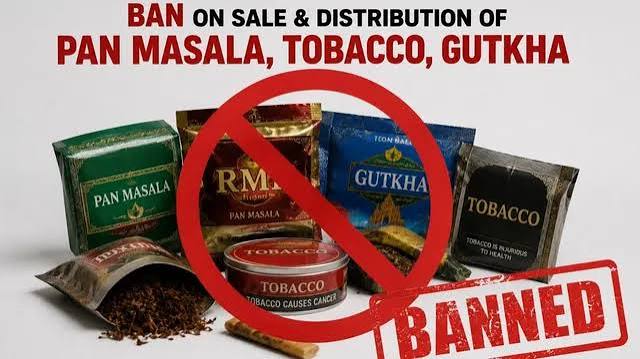
Manufacture, storage, distribution, transportation, and sale of gutkha and pan masala containing any tobacco or nicotine substances have been prohibited by the Karnataka Commissioner of Food Safety for one year. This order, issued under Section 30(2)(a) of the Food Safety and Standards Act (FSSA), 2006, and Regulation 2.3.4 of the Food Safety and Standards (Prohibition and Restrictions on Sales) Regulation, 2011, addresses public health dangers within all districts of the state.
Scope of the one-year tobacco ban
The regulation applies to single-packet gutkha as well as the dual packet combination for consumption.
Prohibited products: Packaged gutkha, tobacco-filled pan masala, and nicotine pouches sold together with chewing products.
Prohibited operations: Manufacturing facilities, refrigerated warehouses, wholesale distribution systems, transport across districts, and retail outlets.
Packaging formats: Applies to sachet packets, plastic packages, and un-packaged mixture.
Tightening of packaging regulations for pan masala by the FSSAI
The ban in Karnataka is consistent with national trends from the Food Safety and Standards Authority of India (FSSAI). In the Food Safety and Standards (Packaging) Amendment Regulations, 2026, the central regulator prohibited plastic and metallic laminated pan masala packaging.
All manufacturers are obliged to rely on only those materials that are environmentally friendly, including cellulose, paperboard, and natural rigid containers. Such regulations will come into force after the publication in the Official Gazette to minimize environmental pollution and prevent any unlawful distribution of products with long shelf life.
Penalties and enforcement mechanisms
The food safety officers, as well as police departments at the local level, have been authorized to conduct any surprise inspection within wholesale centers and inter-state borders.
Anyone who disobeys the directive will have his/her stocks seized, license canceled, and face criminal liability under the FSSA, 2006.
Bureau Report
Leave a Reply