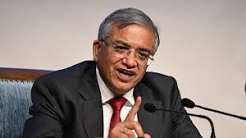
The Opposition’s protest against Chief Election Commissioner Gyanesh Kumar is set to move into a new phase on Tuesday (October 6), as INDIA bloc MPs march from Parliament to Nirvachan Sadan, the Election Commission (EC) headquarters, in New Delhi.
The procession began from Makar Dwar to end at the EC headquarters, where Opposition parties plan to press their demand for Kumar’s resignation over alleged irregularities in the Special Intensive Revision (SIR) of electoral rolls. They are also expected to meet President Droupadi Murmu to raise concerns over the exercise. A total of 19 Opposition parties are taking part in the march.
Heavy security and barricades have been placed along the route ahead of the protest.
Congress President Mallikarjun Kharge, Leader of Opposition in the Lok Sabha Rahul Gandhi, TMC MP Abhishek Banerjee and Samajwadi Party chief Akhilesh Yadav are among the leaders who have joined the procession.
Akhilesh’s participation gives the protest added weight as the Samajwadi Party (SP) is the second-largest Opposition party in the Lok Sabha after the Congress. It has 37 MPs in the Lower House.
The Congress had also invited the Aam Aadmi Party (AAP) and the Dravida Munnetra Kazhagam (DMK) to join the programme. While the DMK declined the invitation, the AAP said it will not take part in Tuesday’s march. The Opposition’s campaign includes parties that have been raising objections to the SIR exercise and the EC’s handling of voter rolls.
Congress plans protests from block level to Delhi
The Congress has prepared a longer programme that will continue beyond Tuesday’s march. From October 10 to October 20, party workers will hold a “Vote Bachao, Desh Bachao” campaign at the block level. The programme will include bicycle and motorcycle rallies, distribution of pamphlets and burning of Kumar’s effigies.
The programme will then move to the booth level. Between October 25 and November 25, Congress workers will organise ‘Vote Bachao, Desh Bachao’ chaupal meetings at polling booth level. Senior party leaders are expected to attend these meetings.
A large rally is planned at Delhi’s Ramlila Maidan on November 1. The party has also planned six journeys around the national capital on November 25 and 26 under the ‘Chalo Delhi’ programme. Six leaders will lead the journeys, which are scheduled to reach the city on the Constitution Day (November 26).
The programme has been drawn up to keep the SIR issue active through the Winter Session of Parliament. Congress leaders have also said that they plan to take the campaign to the five states scheduled to hold assembly elections in February.
What happens when Parliament meets?
The Opposition is preparing to take the dispute into Parliament once the Winter Session begins after November 26. The Congress has hinted that it will seek action against the CEC through the parliamentary process for removal from office.
The demand follows allegations that some decisions related to the SIR exercise were taken by him without the concurrence of the other two Election Commissioners Sukhbir Singh Sandhu and Vivek Joshi.
An Indian Express investigation had earlier reported at least 14 objections recorded by the two ECs over a period of 10 months.
The objections related to changes in Form 6, voter deletions and restorations under SIR, appeals against restored voters in West Bengal and changes in the handling of electoral-roll software.
The EC has rejected suggestions of a split within the three-member panel and has said SIR decisions were taken unanimously.
SC hearing opens another front
The Opposition is also watching proceedings in the Supreme Court, where a bench headed by Chief Justice of India Surya Kant is examining allegations related to the functioning of the EC.
On Monday (October 5), the Supreme Court issued notices to the Centre, the EC, Gyanesh Kumar and the two other election commissioners. The petition alleges that the CEC exercised powers that belonged to the commission as a whole. The bench declined to pass an interim order restraining Kumar and said it needed responses from the respondents before taking further action.
The court also made clear that it would examine whether decisions were taken in accordance with the law. It said that decisions taken without the required unanimity or majority could be annulled if the records establish that the statutory requirements were not followed.
The proceedings also touch on the dispute over the modified Form 6 used during SIR. The EC had said in a September 26 statement that the declaration included in Form 6 for SIR had been upheld by the Supreme Court.
The apex court said on Monday that it had not approved any modified version of Form 6 and would examine the Commission’s records to determine what changes were made and who authorised them.
The court has also cautioned that it cannot act solely on the basis of a newspaper report. It wants authenticated information and responses from the concerned parties before deciding whether any statutory provision was breached.
The Tuesday march is therefore one part of a campaign that the Congress plans to carry through the next parliamentary session. The party’s schedule takes the issue from street-level meetings and rallies to Parliament, while the top court’s proceedings will examine the legal basis of the allegations against the EC.
Bureau Report
Leave a Reply