NewDelhi: Electric cars’ running costs in India: One of the biggest claims about electric cars is their lower running costs. Many people say EVs cost less than Rs 1 per kilometre to drive. But is that actually true, or is it just a marketing gimmick? The answer is a little more complicated. In some situations, electric cars really can cost under Rs 1 per km. But in other cases, the cost can be much higher depending on where and how you charge the vehicle.
Electric cars are cheapest to run when charged at home. Most small to mid-size EVs consume around 12 to 15 kWh of electricity for 100 km. If your home electricity rate is around Rs 7-8 per unit, the running cost comes to nearly Rs 1 per km or sometimes even lower.
For example, if an EV uses 14 kWh for 100 km and electricity costs Rs 7 per unit, the cost becomes around Rs 98 for 100 km. That means less than Rs 1 per km. This is why many EV owners prefer charging at home overnight.
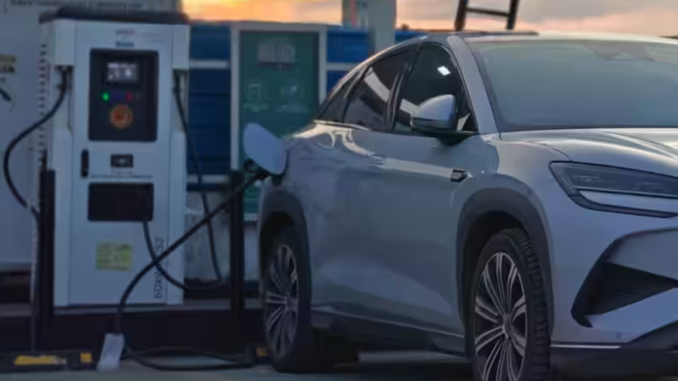
Public chargers: Things become different when you use public charging stations. Fast chargers usually cost much more than home electricity. In many cities, charging rates can go up to Rs 18-25 per unit. At those prices, the running cost of an EV can rise to around Rs 2.5 to Rs 4 per km depending on the car and driving style. So, the “less than Rs 1 per km” claim is mostly true only for home charging.
Even with public charging, EVs are often cheaper to run than diesel cars. For example, a diesel car giving 22 kmpl with diesel priced around Rs 90 per litre will cost nearly Rs 4 per km to drive. In comparison, many electric cars still remain cheaper to drive.
CNG cars are currently the biggest competition for EVs in terms of running costs. A good CNG hatchback can run at around Rs 2 to Rs 3 per km, depending on gas prices and mileage.
This means home-charged EVs are usually cheaper than CNG cars. But EVs charged mainly through public fast chargers may not always offer a huge difference.
There’s more than just running costs. People also need to remember that EV ownership is not only about electricity bills. Charging convenience, battery life, service costs and charging infrastructure also matter. Electric cars generally have lower maintenance costs because they have fewer moving parts compared to petrol and diesel vehicles.
So, is it a marketing gimmick?
Not completely. The “less than Rs 1 per km” claim is possible in real-world conditions if you mostly charge your EV at home. But if you depend heavily on public fast chargers, the running cost increases noticeably.
So, the claim is partly true but only under the right conditions, as with public charging, the running cost can go up to around Rs 4 per km.
Leave a Reply