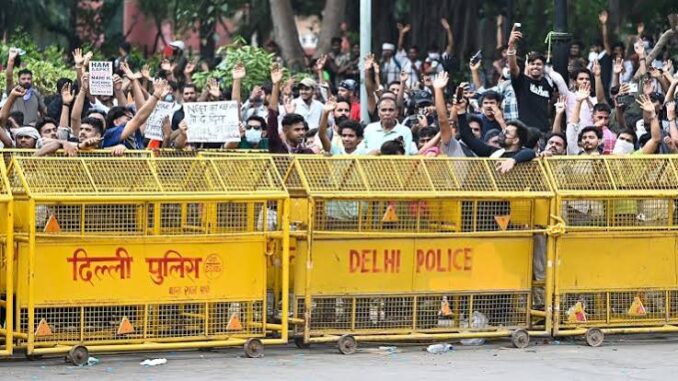
Following the large-scale protests that followed, violent crackdown at the Jantar Mantar on July 20 and the Delhi Police has decided to strengthen and overhaul its intelligence-gathering system to improve preparedness for major demonstrations and public gatherings.
According to sources, Delhi Police Commissioner Anurag Kumar has directed the Intelligence Wing and the Special Branch to collect and analyse at least 10 key inputs before any large or planned protest.
On July 20, thousands of protesters gathered in and around Jantar Mantar, with nearly 30,000 people taking to the streets and attempting to march towards Parliament, demanding action over paper leaks and other examination-related irregularities.
As the situation escalated, clashes broke out between protesters and the police. The use of force by the police later drew widespread criticism.
Renewed intelligence system
In the aftermath of the incident, Delhi Police reviewed its intelligence system. Officials felt that they had not received adequate and accurate information in advance regarding the number of protesters, their mobilisation, and the involvement of different organisations.
Sources said the Special Branch has now been instructed to generate more detailed and actionable intelligence, rather than limiting reports to the protest venue and estimated crowd size.
Detailed profiling of protestors
As part of the new approach, police will also profile protesters to understand how many participants are arriving from different states, how they are being mobilised, and the role of key organisers and leaders.
Authorities will also seek to assess the protest agenda and major demands beforehand.
Police will gather information about where protesters are staying, their local contacts, and their connections within Delhi.
Sources added that officials will also collect details about links with various organisations, possible sources of funding, and logistical arrangements made for the demonstrations.
This means the focus will no longer be limited to when and where a protest is taking place. Police will also examine who is organising the event, how demonstrators are being mobilised, where they are coming from, and how the protest has been planned.
The Police Commissioner has also issued strict instructions regarding the wireless communication system.
To ensure faster information-sharing between personnel on the ground and senior officers during protests, the wireless network has been reviewed and any shortcomings have been addressed.
According to sources, the purpose of these measures is not to stop protests, but to improve the assessment and management of law and order during large public events.
Special attention will be given to demonstrations that attract large numbers of participants from outside Delhi or involve multiple organisations.
Bureau Report
Leave a Reply