A fragile two-week ceasefire between the United States and Iran has taken some of the heat out of an oil market that had been running on anxiety for weeks, with prices lurching upward on fears of a blockade through the Strait of Hormuz. But in India, nobody is treating this pause as a reason to relax.
India imports nearly 90 per cent of its crude oil, and roughly a fifth of that passes through the Gulf. When that pipeline is threatened, the consequences land quickly, at petrol pumps, in household LPG bills, and across an economy still finding its footing. So while diplomats talk and markets breathe easier, India’s energy planners are moving with quiet urgency to make the most of a window that may not stay open long.
Here is what New Delhi has done in the past two weeks.
Bringing Iran back into the picture
The most eye-catching move has been the resumption of Iranian crude imports, something India had not done since 2019, when American sanctions forced a halt. A temporary sanctions waiver has changed that calculus. Tankers carrying Iranian oil are already en route to Indian refineries, offering a swift top-up to domestic supplies.
The appeal is straightforward — Iran is close, and its oil is competitively priced. In a disrupted market, that combination is hard to ignore.
Not putting all eggs in one basket
India is not, however, staking everything on Iran. Alongside the resumption of Persian Gulf imports, New Delhi has been quietly broadening its supplier base. Russia remains a cornerstone of India’s crude diet, but West Africa and Latin America are being tapped for additional flexibility. Other Gulf producers are also in the mix, providing a buffer should tensions along the Strait flare up again.
As the Economic Times noted, the diversification is specifically designed to reduce India’s exposure to any single chokepoint, Hormuz.
Filling the tanks while prices are down
The ceasefire triggered an immediate drop in global oil prices, somewhere between 10 and 15 per cent, and India has been using that window deliberately. With crude cheaper on the spot market, the government has been accelerating the filling of its Strategic Petroleum Reserves, a network of underground storage caverns built precisely for moments like this.
According to Bloomberg, India’s current reserves, combined with refinery stocks, cover around eight weeks of consumption. A parliamentary panel has gone further, recommending the buffer be extended to 90 days. That target remains some way off, but the cheaper-price window is helping close the gap faster than would otherwise be possible.
Keeping the sea lanes open
Even a ceasefire does not make the Strait of Hormuz a comfortable place for a laden tanker. India has responded by deploying naval escorts for vessels carrying crude from the region, while also streamlining port operations to keep deliveries moving smoothly once ships arrive.
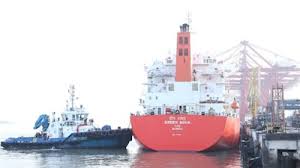
The practical results are already visible. On Thursday, the oil tanker Green Asha crossed Hormuz and docked in Mumbai carrying 15,000 tonnes of LPG, a small but telling sign that India’s supply chain is holding.
Preparing for the worst
Behind the scenes, contingency plans are being drawn up for a scenario in which the ceasefire collapses. These include the possibility of rationing LPG for households, curtailing exports of refined fuels to keep more supply at home, and switching to alternative energy sources where feasible. As NDTV reported, the measures form part of a broader emergency preparedness framework aimed at preventing shortages and containing price spikes.
The bigger picture
Taken together, India’s response over the past fortnight amounts to a compressed but comprehensive energy security drive, reopening a long-dormant supply corridor, spreading risk across multiple regions, topping up reserves at favourable prices, guarding the sea routes, and quietly preparing for things to go wrong again.
The ceasefire may hold, or it may not. Either way, India is trying to make sure the answer to that question matters a little less than it did a month ago.
Bureau Report
Leave a Reply