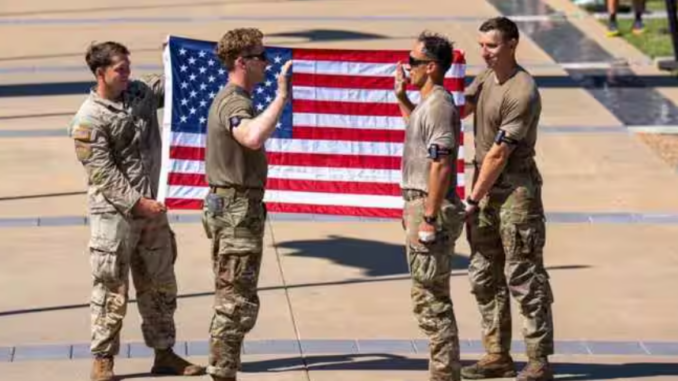
America: The United States Army has recently changed its enlistment rules in response to a growing recruitment challenge and the rules come into effect from April 20. Two of the most notable changes are raising the maximum enlistment age from 35 to 42 and allowing single convicts of marijuana ,a move aimed at widening the pool of potential recruits.
Alongside this, the Army has relaxed some eligibility criteria. Under the updated Army Regulation 601–210, individuals with a single past offence related to marijuana possession or drug paraphernalia no longer need a special waiver to join. These revisions were formally introduced in March and came into effect a month later, applying across the Regular Army, Army Reserve, and National Guard.
Recruitment Problem
Although the Army managed to meet its recruitment targets in 2024 and 2025, the situation wasn’t as stable in the preceding years. It fell short by roughly 25% in 2022 and about 23% in 2023. Even more concerning is the United States Army Reserve, which has failed to meet recruitment goals for six consecutive years.
The profile of recruits is also shifting. The average age of new enlistees has been creeping up, now sitting at around 22.7 years—higher than in previous decades. This suggests the Army is increasingly relying on slightly older candidates rather than fresh school leavers.
Why Young Americans Are Hesitating
Several factors explain why fewer young people are interested in military service today.
First, the job market has changed. With more opportunities in the private sector, many young Americans see civilian careers as more attractive and less risky.
Second, awareness and perception issues play a role. According to a survey by the Pew Research Center, Americans aged 18 to 29 are more likely to view the military negatively than positively. In that age group, 53% said the military has a negative impact, compared to 43% who viewed it positively.
Third, eligibility itself is a challenge. The Army has pointed to rising levels of obesity, drug use, and mental health concerns as factors that disqualify a significant portion of potential recruits.
Finally, geopolitical factors cannot be ignored. Periods of international tension—such as the recent US–Israel conflict with Iran tensions—often influence public sentiment. Many younger Americans have shown reluctance toward military involvement in overseas conflicts, which can dampen enthusiasm for enlistment.
A Strategic Adjustment
Taken together, these changes reflect a broader shift in how the Army is adapting to modern realities. By raising the age limit and easing certain restrictions, it is trying to remain competitive in a tighter and more complex recruitment environment.
The challenge, however, goes beyond policy tweaks. It is about changing perceptions, addressing eligibility gaps, and making military service relevant to a new generation that views work, risk, and national service very differently from those before them.
Bureau Report
Leave a Reply