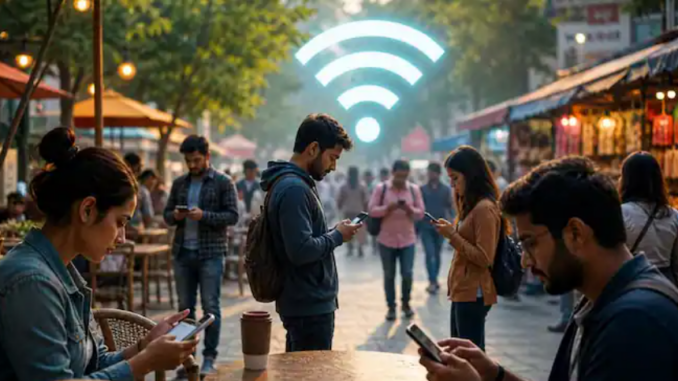
NewDelhi: Public Wi-Fi safety: Millions of people across India connect to public hotspots every day, but cyber experts warn that public Wi-Fi dangers can expose users to hacking, data theft, and fraud. Whether at airports, cafes, or railway stations, unsecured networks allow attackers to intercept personal data. With rising digital payments and mobile banking in 2026, it is very important to understand what happens when you connect to public Wi-Fi.
Here are a few ways with which you can stay safe and protect your money and personal data.
What really happens when you use public Wi-Fi
When you connect to free Wi-Fi, your device communicates over a shared network that is often not encrypted. This means hackers on the same network can track your activity. They can use methods like “man-in-the-middle” attacks, where they quietly sit between you and the website you’re visiting.
In simple terms, anything you type–such as passwords, OTPs, emails–can be intercepted if the network is not secure. Fake Wi-Fi hotspots that look like legitimate ones make the risk even higher.
Public Wi-Fi dangers you should know
The biggest public Wi-Fi dangers are identity theft, financial fraud, and malware attacks. Cybercriminals can steal login details for banking apps, social media, or even work accounts.
Another common trick is session hijacking, where attackers take control of your logged-in accounts without needing your password again. Some networks may also inject malware into your device, which can track your activity even after you disconnect.
For everyday users, this can lead to loss of money, compromised UPI apps, or misuse of personal photos and messages.
How to stay safe
You don’t need to avoid public Wi-Fi completely, but you must use it smartly. Avoid logging into banking apps or making payments on open networks. Always check for “HTTPS” in the website address–this means the connection is encrypted.
Turn off auto-connect settings on your phone so it doesn’t join unknown networks automatically. Using a trusted VPN (Virtual Private Network) adds an extra layer of security by encrypting your data.
Also, enable two-factor authentication (2FA) on important apps. Even if someone steals your password, they won’t get easy access.
Why this is important in your daily life
With digital payments becoming common in India, one unsafe connection can result in huge financial loss. From railway stations to malls, public Wi-Fi is everywhere–but so are cyber risks.
A few simple precautions can protect your bank balance, personal data, and online identity.
Public Wi-Fi is convenient, but it comes with real risks. Knowing these dangers and taking basic safety steps can help you stay connected without putting your digital life in danger.
Leave a Reply