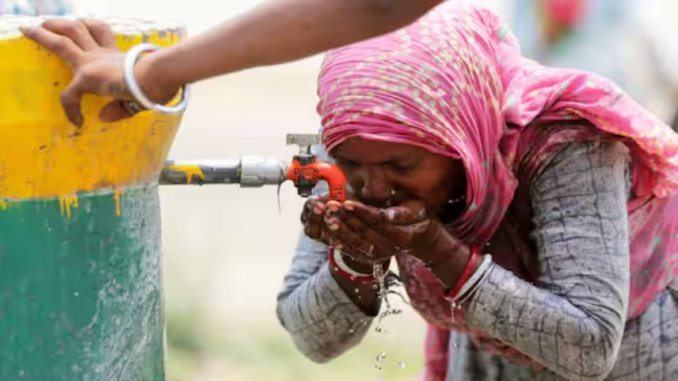
NewDelhi: India’s rising heat is no longer only a seasonal discomfort. A new study warns that it is becoming a major challenge for jobs, health and economic stability. Titled ‘Critical Perspectives on Extreme Heat in India’, the report from the Harvard University’s Salata Institute says extreme heat is the country’s most dangerous climate risk and that conditions ahead may become even more difficult.
The report presents a picture of exposure on the ground. Nearly three-quarters of India’s workforce (around 38 crore people) work in conditions where they are directly exposed to high heat. This includes agriculture, construction work and a large informal sector that supports almost half of India’s economy.
It also warns that by 2030, as many as 20 crore Indians could face life-threatening heat conditions. This projection points to how rapidly the situation is moving.
The crisis that does not look like a crisis
One of the main concerns raised in the report is that extreme heat does not behave like other disasters. It does not destroy buildings overnight like floods or storms. But it works in a slow and less visible way, affecting productivity, income and health over time.
The report states that “extreme heat impacts are scattered, gradual and so invisible that they are not captured in the way governments and financial systems measure damage”.
Why the real cost is missed
According to the study, the actual economic cost of heat is often undercounted. This includes lost working hours, reduced productivity and increased pressure on healthcare systems.
The report also points to how India’s living and working conditions add to the problem. Dense urban spaces, heat-absorbing buildings, limited cooling access and stretched public health systems all combine to make the situation harder for large sections of the population.
Unequal access to cooling
A major issue pointed out in the findings is access to cooling. Only about 8 percent of Indian households have air conditioning. This leaves the majority of the population dependent on limited or informal cooling methods during peak summer conditions.
The report says this creates a situation where survival and comfort depend on economic status, turning heat into an inequality issue.
Temperatures rising since 1980
The study shows that India’s maximum temperatures have been rising since 1980, increasing by about 0.28 degrees Celsius per decade. While average temperatures are going up, the report says the bigger concern is the growing intensity and frequency of heatwaves.
Heatwaves are now lasting longer and becoming more intense, affecting agriculture, public health and infrastructure at the same time.
The report also cautions that past temperature trends may not fully capture future risks. It suggests that present planning systems may be outdated for the scale of heat India could face in the coming years, making long-term preparedness a growing concern for policymakers.
Bureau Report
Leave a Reply