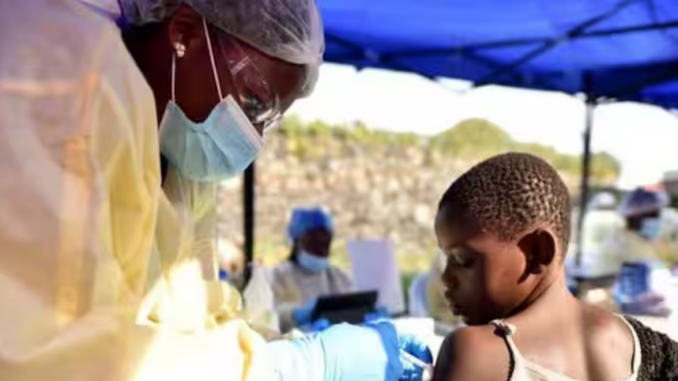
Africa: Africa’s top public health agency on Friday declared an Ebola outbreak in the Democratic Republic of Congo’s eastern Ituri province.
The Africa Centres for Disease Control and Prevention (Africa CDC) said nearly 246 cases and 80 deaths have been reported, primarily in the gold-mining towns of Mongwalu and Rwampara of the Central African country.
The country’s Health Minister, Samuel Roger Kamba Mulamba, said late Friday that tests conducted on Thursday confirmed eight cases of the Bundibugyo strain of the Ebola virus in the health zones of Rwampara, Mongwalu and Bunia.
In response to the latest outbreak, the Democratic Republic of the Congo government said it has activated its public health emergency operations centre, strengthened epidemiological and laboratory surveillance, and swiftly deployed emergency response teams.
The Africa Centres for Disease Control and Prevention said it was convening an urgent meeting with Democratic Republic of the Congo, Uganda, South Sudan and international partners to enhance cross-border surveillance, preparedness and response efforts.
What is Ebola
Ebola was first discovered in 1976 in what is now the Democratic Republic of the Congo and is believed to have originated from bats. The latest one marks the country’s 17th outbreak of the deadly viral disease.
The disease spreads through direct contact with bodily fluids or via broken skin, often leading to severe bleeding and organ failure.
Early symptoms include fever, muscle pain, fatigue, headache and sore throat, which can later leads to vomiting, diarrhoea, rashes and bleeding.
There is no proven cure for Ebola as there are no approved drugs or vaccines available to treat Ebola virus disease (EVD).
According to World Health Organisation (WHO), the average fatality rate is around 50%.
About the current strain
The current strain has been identified as Bundibugyo ebolavirus. Preliminary lab results from the DRC’s National Institute of Biomedical Research ruled out the more common Zaire ebolavirus, while full genomic sequencing later confirmed the Bundibugyo strain. Uganda also reported one imported death linked to this strain from the DRC.
This strain is one of the several orthoebolaviruses that cause Ebola diseases in humans. First identified in 2007 in Uganda’s Bundibugyo district. This strain caused two major outbreak previously in 2007 and in 2012.
Leave a Reply