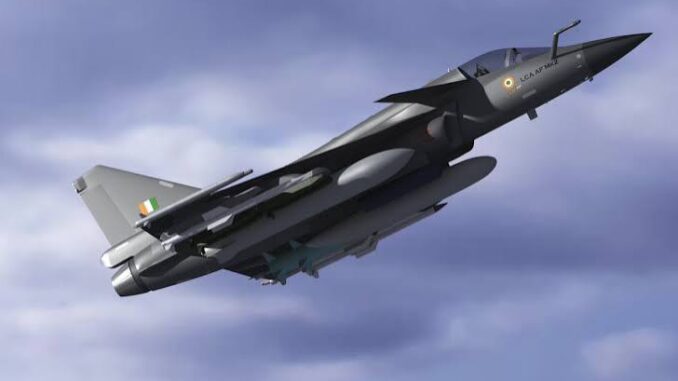
NewDelhi: The most interesting aircraft story on Indian Air Force Day this year may not be about a flying machine at all. The Indian Air Force (IAF) is preparing for a sky that is getting crowded with drones.
That change is visible in the force’s recent exercises and technology programmes. In September, the IAF held its first Dronathon at the Pokhran Field Firing Range in Rajasthan and brought together more than 20 defence companies, start-ups, MSMEs, public sector firms and technology developers. The exercise tested surveillance drones, autonomous systems, swarm technology, electronic warfare and counter-drone systems under operational conditions.
The the force also demonstrated an indigenous system called ‘Vayu UttaM’. It has been built to detect and track both military and civilian unmanned aircraft and help manage their movement in crowded airspace. The system can also help identify unauthorised or rogue drones.
That tells a very different story about the future of air power.
Air warfare is no longer just about the range of a fighter jet or the weapons it has. The IAF also has to spot small drones, identify them in time and decide how to deal with them before they become a threat.
The change has been accelerated by the experience of Operation Sindoor.
During the May 2025 operation, India said around 300 to 400 drones attempted intrusions at 36 locations along the International Border (IB) and Line of Control (LoC). Indian forces used kinetic and non-kinetic methods against the incoming systems. One armed Pakistani UAV also attempted to target Bathinda military station and was detected and neutralised, according to the Ministry of External Affairs.
Chief of Defence Staff General Anil Chauhan later said the military offensive demonstrated the operational value of indigenous unmanned aerial vehicles and counter-UAS systems. He called for greater domestic capability in both drones and the systems needed to defeat them.
From aircraft to an entire airspace
This is where the IAF’s Dronathon becomes important.
The exercise was not simply a showcase of new drones. The stated aim was to see whether these systems could produce an operational effect in difficult conditions. The IAF tested surveillance and reconnaissance, autonomous operations, swarm technologies, electronic warfare and counter-UAS capabilities.
The force also released an IAF UAS Roadmap to tell Indian industry, research institutions and academia what capabilities it expects from the unmanned systems sector. The roadmap goes beyond the aircraft. It includes sensors, propulsion, communications, autonomy, electronic warfare, countermeasures and airspace management.
That is an important change in the way the air domain is being treated.
A drone is only one part of the system. Behind it are sensors that find it, networks that transmit information about it, software that helps identify it, operators who make decisions and weapons or electronic systems that can stop it.
The IAF’s leadership has also described unmanned systems as an extension of air power. In May, Air Chief Marshal AP Singh said drones and unmanned aerial systems offered lower risk to human lives during operations and were attractive because of their relatively low cost. He also said coordination was crucial to the success of the operation.
The IAF’s larger exercises have followed a similar approach.
At Vayu Shakti-2026 in February, Rafale, Su-30MKI, Tejas and Mirage 2000 aircraft carried out precision strikes while Apache and Chinook helicopters conducted separate combat and support drills. The exercise tested operations during both day and night and included air superiority, ground support and logistics.
The picture emerging from these exercises is of an air force working across several layers at once. Fighters provide speed and firepower. Helicopters support forces closer to the battlefield. Drones provide surveillance and other options. Electronic warfare can interfere with an opponent’s systems. Counter-UAS systems deal with the rising number of small unmanned threats.
Will next battle begin with finding one small object?
The threat is easier to understand when you look at the size of these drones.
A traditional fighter aircraft is difficult to miss. A small drone can be much difficult to detect, particularly when many systems are operating at the same time.
That creates a new challenge for those planning air defence operations. An air defence network has to deal with objects that can be cheap, numerous and difficult to identify at first sight.
The Defence Research and Development Organisation (DRDO) is also working on counter-swarm technology, including systems involving artificial intelligence and machine learning. Its technology development work includes swarms of vertical take-off and landing drones intended to counter other drone swarms.
The IAF’s approach is therefore moving towards a system in which manned aircraft, unmanned platforms, sensors and air defence work together.
That does not make the fighter obsolete. It changes the job of the fighter.
Singh used the Air Force Day to make a related point when he said advanced aircraft and systems were only tools and that the true strength of the force lay with its air warriors. He said operational preparedness should be judged by how fast and confidently the IAF can act when required.
“Equipment, technology and platforms are merely tools; the true source of our success lies in our air warriors,” he said at the 94th Air Force Day celebrations at Hindon.
His statements are in line with the IAF’s technological push this year. The force is acquiring new platforms and testing new weapons while also trying to build the people, networks and decision-making systems needed to use them together.
The Air Force Day is therefore being observed in a very different technological environment from the one in which the IAF operated even a few years ago.
The aircraft on the Hindon tarmac still tell part of the story. The less visible systems watching the air around them may tell the more important part.
Bureau Report
Leave a Reply