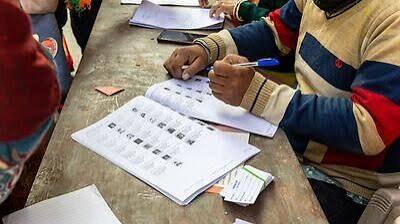
Jaipur: Rajasthan’s latest draft electoral roll has raised fresh questions over discrepancies in official voter counts, with three different sets of figures emerging for the state in less than a year. The Congress has questioned the transparency of the revision process, alleging that the exercise could put the voting rights of eligible citizens at risk.
The draft electoral roll, published on Thursday under the Special Summary Revision (SSR) 2027, puts Rajasthan’s total electorate at around 5.26 crore. This is about 11 lakh higher than the 5.15 crore voters recorded in the final Special Intensive Revision (SIR) roll published in February.
However, the latest figure is still around 19 lakh lower than the 5.45 crore voters recorded in the State Election Commission’s final electoral roll in early October 2025.
This means Rajasthan now has three different official voter counts: 5.15 crore in the SIR roll, 5.45 crore in the SEC roll (pre SIR) and 5.26 crore in the latest Election Commission-linked SSR draft.
The latest figures have triggered questions over why the official electoral rolls of the same state show such a significant variation.
The qualifying date for the revision is January 1, 2027. The Election Commission has opened the window for claims and objections from November 12 to December 11, while the final electoral roll will be published on January 4, 2027.
The draft rolls have been shared with recognised political parties and uploaded to the Chief Electoral Officer’s website. Voters can apply for inclusion, deletion or correction through the prescribed forms before the final list is published in January.
Rajasthan Voter Roll Discrepancy: Congress Questions Election Commission
Reacting to the discrepancy, Congress leader and national spokesperson, Pooja Tripathi questioned the accountability and transparency of the electoral revision process. She said the Election Commission must ensure that the exercise does not result in eligible voters losing their right to vote.
“An electoral roll is not merely an administrative document; it’s a gateway to democracy. The Election Commission must ensure that the process of cleaning voter lists does not end up disenfranchising genuine voters. No eligible Indian should have to fight the system to prove their right to vote.
“And this whole Rajasthan exercise raises some very pertinent questions. If 26.63 lakh names were retained in one government electoral database but removed from another, what individual-level verification supports these deletions? Why were the two electoral authorities not required to reconcile their databases before publishing the respective roll?” she asked.
“The biggest point here is that, you know, the integrity of an election is measured not just by the number of names on a final list. It is measured by—you know, it’s constitutionally provided—the right of every citizen for a fair and effective opportunity to exercise their franchise. And that’s why this raises very serious questions. It raises the questions of accountability. It raises the questions of question of transparency, and it raises the question of credibility of the revision process,” she added.
Tripathi alleged that discrepancies across states exposed structural flaws in the SIR exercise, questioning the integrity of the electoral process and demanding that the exercise be scrapped.
Bureau Report
Leave a Reply