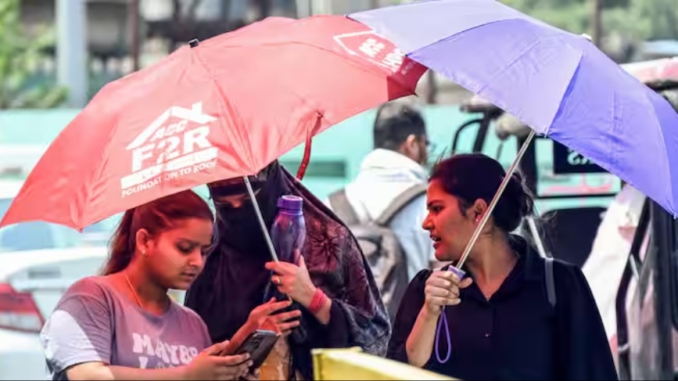
NewDelhi: India is reeling under intense heatwave conditions, with temperatures rising well above normal and making life difficult for its citizens. India witnessed temperatures in the range of 40–45 degrees Celsius over most parts of the country, except the Western Himalayan region, Northeast India, and the West Coast on Saturday, according to the India Meteorological Department (IMD).
The national capital recorded 44.5 degrees Celsius on Saturday, which is significantly above the seasonal average.
These heatwave conditions are usually seen during May and June, so experiencing them in late April is highly unusual. This is a sharp contrast to March, which remained mild and pleasant, similar to February’s lingering chill.
Regional impact
Uttar Pradesh is also facing scorching temperatures. The highest maximum temperature in the state, 45.2 degrees Celsius, was reported in Prayagraj.
The forecast ahead
Unfortunately, there is no relief from the intense heat in the coming days.
Delhi is likely to record maximum temperatures ranging from 42 to 44 degrees Celsius, which is around 3.0 to 5.1 degrees Celsius above the seasonal average.
Regions likely to face heatwave conditions
| Region | States |
|---|---|
| Northwest India | Punjab, Haryana, Delhi, Rajasthan, Uttar Pradesh |
| Central India | Madhya Pradesh, Chhattisgarh, Vidarbha |
| Southern Regions | Kerala and Mahe |
A heatwave is officially declared when the maximum temperature exceeds 40 degrees Celsius and remains 4.5 to 6.4 degrees Celsius above the seasonal average.
Amid scorching temperatures across several parts of the country, the India Meteorological Department (IMD), under the Ministry of Earth Sciences, has issued detailed heatwave guidelines and advisories as conditions remain above normal. Detailed guidance available online: https://mausam.imd.gov.in/responsive/heatwave_guidance.php
Heat Stress: Do’s and Don’ts
| Do’s | Don’ts |
|---|---|
| Stay out of the sun if possible | Avoid caffeine in hot weather |
| Cool down whenever possible | Do not wait until thirsty to drink water |
| Drink small amounts of water frequently | |
| Wear loose cotton clothing | |
| Use hats and sunscreen |
Signs of heat stress
| Common Signs |
|---|
| Dizziness |
| Headache |
| Weakness |
| Rapid heartbeat |
| Nausea |
| Cramps |
| Chest pain |
| Labored breathing |
IMD Safety Guidelines
Personal Protection
| Guidelines |
|---|
| Avoid sun exposure from 12 noon to 3 p.m. |
| Drink water regularly, even without thirst |
| Wear light-colored, loose cotton clothes |
| Use hats, umbrellas, goggles, and proper footwear |
| Keep a damp cloth on your head and neck during outdoor work |
| Never leave children or pets inside parked vehicles |
Rehydration and cooling
| Recommended measures |
|---|
| Use ORS (Oral Rehydration Salts) |
| Drink lassi, torani, lemon water, and buttermilk |
| Keep rooms cool using curtains and sunshades |
| Open windows at night for cooler air |
| Use fans, damp cloths, and cold-water baths |
First Aid for Sunstroke
| Action | Instructions |
|---|---|
| Cooling | Move the person to a cool, shaded place |
| Temperature Control | Wipe with a wet cloth or pour normal water on the head |
| Rehydration | Give ORS, lemon sharbat, or torani |
| Medical Help | Take them to the nearest health center immediately |
Acclimatization tips
| Tips |
|---|
| Avoid direct sun for at least one week if new to hot regions |
| Increase heat exposure gradually |
| Maintain high fluid intake |
Bureau Report
Leave a Reply