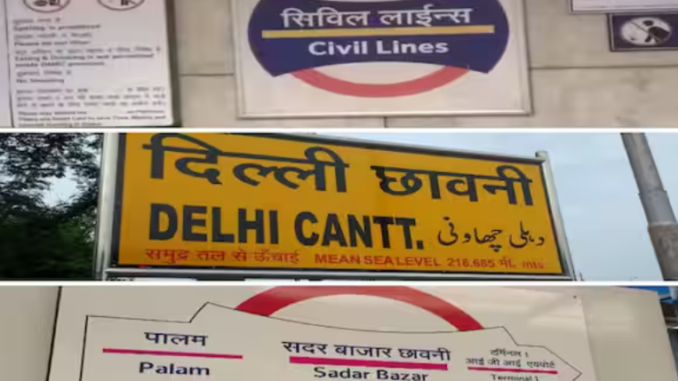
NewDelhi: Across India, many cities share the same familiar names for their neighbourhoods. From Civil Lines to Cantonment and from Sadar to Gymkhana, these names appear again and again whether you are in Delhi, Lucknow, Prayagraj or Jaipur. Recently, Civil Lines has also been in the spotlight after reports suggested that names from the colonial period may be reviewed or changed.
These names are not only random labels. They go back to a system set up during British rule, and many of them still play a role in how Indian cities are laid out even today.
How Civil Lines came into existence
The story of Civil Lines goes back to the British administration in India. During colonial rule, the British created separate residential areas inside cities for their officials. These areas were called Civil Lines because they were meant for “civil” officers, not military personnel. Judges, district collectors and senior administrators lived here in planned colonies that were cleaner, more organised and better maintained than most other parts of the city at that time.
These neighbourhoods were also linked to governance. Offices and residences of senior officials were often nearby, making Civil Lines an important administrative zone. Even after the British left, these areas continue to be there.
Over time, they turned into some of the most premium residential locations in many cities. Old government bungalows, wide roads and low-density housing are still common features in these neighbourhoods, and in several cities, they continue to house senior officials and VIP residences.
Why the name Civil Lines
The name comes from the separation between civilians and the military. While army settlements were called Cantonments or “Cantt”, the civilian administrative staff lived in Civil Lines. These two areas were developed differently and served different purposes. Cantonments were reserved for military personnel, while Civil Lines were meant for civil administration.
Other common city names with similar origins
Many other familiar city names also trace their origins to the colonial period.
Cantt (Cantonment): These were military zones developed for army personnel. They were usually located on the outskirts of cities and designed with strict rules, planned layouts and more open space.
As cities expanded over time, many cantonment areas became part of the main urban surroundings, but they still keep their greenery and controlled style of development.
Gymkhana: These areas or clubs in many cities were once social spaces for British officers. Even today, roads and neighbourhoods around these clubs often still carry the name Gymkhana.
Station Road: Almost every major city has a Station Road. This is simply the road leading to the railway station, and the name has not changed for decades.
Sadar areas: Sadar markets grew as commercial centres. These were busy trading zones with shops and marketplaces, often developed near cantonments to serve soldiers and nearby residents. Even today, many cities still refer to their main market areas as Sadar.
Mall Road: In hill stations, Mall Road was originally built as a promenade for British officers to walk and socialise. It became the main public space in hill towns and continues to be an attraction in most tourist destinations.
Gandhi Nagar, Shastri Nagar and MG Road: After independence, many places were renamed or newly named after national leaders such as Mahatma Gandhi and Lal Bahadur Shastri. That is why cities across India have Gandhi Nagar, Shastri Nagar and MG Road in different forms.
A map built by history
Even today, these names are woven into everyday life in Indian cities. They are not merely addresses but reminders of how cities were planned and how those plans continue to influence urban spaces.
Bureau Report
Leave a Reply