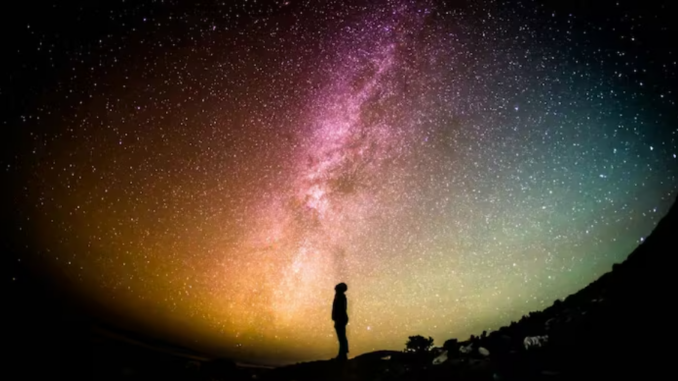
Ladakh: India’s darkest place: Tucked away in the remote Changthang region of Ladakh, Hanle is widely known as the darkest place in India. Surrounded by barren mountains, vast open landscapes, and almost zero light pollution, the tiny Himalayan village has emerged as one of the best locations in the country for astronomy and stargazing.
Located at an altitude of over 4,500 metres above sea level near the Indo-China border, Hanle offers crystal-clear night skies where the Milky Way can often be seen with the naked eye.
Why Hanle is called India’s darkest place
Hanle has extremely low levels of artificial lighting, making its skies exceptionally dark and ideal for astronomical observations. Unlike cities filled with streetlights and pollution, Hanle remains largely untouched by urban development.
The cold desert climate, dry atmosphere, and high altitude further improve visibility, allowing scientists and tourists to observe stars, planets, meteor showers, and distant galaxies more clearly.
The region has also been recognised as India’s first Dark Sky Reserve, aimed at preserving the natural night sky and promoting astro-tourism.
Home to one of the world’s highest observatories
Hanle is famous for housing the Indian Astronomical Observatory, operated by the Indian Institute of Astrophysics.
Situated at a height of around 4,500 metres, the observatory is considered one of the highest astronomical observatories in the world. Scientists use powerful telescopes here to study celestial bodies and conduct space research.
The observatory’s location was specifically chosen because of its exceptionally dark skies and minimal atmospheric disturbance.
India’s first dark sky reserve
In recent years, Hanle gained further global attention after being designated as India’s first Dark Sky Reserve. The initiative was launched to protect the region from increasing light pollution and to encourage sustainable tourism.
Under the Dark Sky Reserve project:
- Use of artificial lighting is regulated
- Local communities are encouraged to adopt eco-friendly lighting practices
- Astro-tourism activities are promoted
The reserve covers a large area around Hanle and nearby villages, creating one of the best night-sky viewing zones in South Asia.
A Growing hub for Astro-Tourism
Hanle has become increasingly popular among:
- Stargazers
- Astrophotographers
- Astronomy enthusiasts
- Adventure travellers
Tourists visiting the region often spend nights observing constellations, planets, and the Milky Way under the clear Himalayan sky. During new moon nights, visibility becomes even more spectacular.
Astro-tourism festivals and sky observation camps are also gradually becoming popular in the region.
Best time to visit Hanle
The ideal time to visit Hanle is between May and September. During these months, roads remain relatively accessible and the weather stays suitable for travel and night-sky observation. Winters in Hanle are extremely harsh, with temperatures dropping far below freezing.
How to reach Hanle
Hanle is located around 250 km from Leh and can be reached by road. Visitors usually travel via Nyoma after obtaining the required Inner Line Permit, as the region lies close to the international border.
Due to its remote location, tourists are advised to plan their journey carefully and acclimatise properly to avoid altitude-related health issues.
What makes Hanle special is the rare combination of scientific importance and natural beauty. By day, the region offers stunning views of Ladakh’s rugged mountains and vast plains. By night, it transforms into one of the clearest windows to the universe.
Leave a Reply