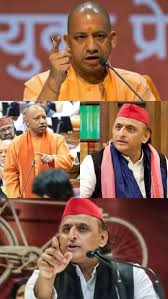
Uttar Pradesh politics is synonymous with caste. Whether it is the upper castes (Savarna), Other Backwards Classes (OBC), or Dalits, caste remains the gravitational center of the state’s political universe. Within this landscape, the OBCs hold the most significant influence after the Dalits. However, the OBC vote is not a monolith; it is bifurcated into two distinct categories: Yadavs and non-Yadav OBCs. While the Samajwadi Party (SP) maintains a firm hold on the Yadav demographic, the Bharatiya Janata Party (BJP) has been systematically executing a strategy to capture the non-Yadav OBC vote bank, which is now central to its vision for the 2027 assembly elections. With the BJP winning Bengal and Odisha, two fronts where it marked a first for the saffron party, the party is now gearing up for the semi-final battle ahead of the 2029 Lok Sabha elections. Interestingly, the 2027 assembly elections will also be a litmus test for teh 10 years of the Yogi Adityanath government.
The Evolution of the OBC Strategy
Since the 2014 Lok Sabha elections, the BJP has successfully reconfigured UP’s political map by consolidating smaller, non-Yadav OBC communities—such as the Kurmi, Koiri, Rajbhar, Prajapati, Nishad, and others. This coalition was the engine behind the BJP’s consecutive victories in 2017 and 2022, effectively displacing the previous dominance of the Bahujan Samaj Party (BSP) and the Samajwadi Party.
To bolster this influence, the BJP has secured strategic alliances with key caste-based leaders:
* Dr. Sanjay Nishad (Nishad Party): Crucial for integrating the Majhwara/Nishad community.
* Om Prakash Rajbhar (Suheldev Bharatiya Samaj Party): Instrumental in engaging the Rajbhar vote.
* Anupriya Patel (Apna Dal-S): The primary face of Kurmi politics, whose alliance strengthens the BJP’s grip on this vital segment.
Data Breakdown: Targeted Demographics
The BJP’s current blueprint focuses on smaller, numerically significant OBC castes that are strategically positioned as “deciders” in various regional pockets.
Kurmi: 5.0 percent
Kushwaha: 4.6 percent
Rajbhar: 4.0 percent
Prajapati: 3.9 percent
Pal: 3.7 percent
Nishad (including Majhwara): 10.25 percent
Vishwakarma (Lohar): 3.3 percent
Chauhan: 2.2 percent
Bind: 1.9 percent
Arkvanshi: 1.9 percent
Regional Fronts and Political Competition
The battle for 2027 will be fought across specific regional clusters where these communities exert influence:
1. Purvanchal: Likely to be the primary battleground. Communities like the Rajbhars, Nishads, Kushwahas, and Mauryas are densely populated here, making them essential for victory.
2. Central UP & Awadh: In districts like Lucknow, Sitapur, Hardoi, and Unnao, the Maurya and Shakya communities hold sway. The SP is expected to mount a stiff challenge here to penetrate the BJP’s traditional base.
3. Western UP: Competition is intensifying for the support of Gurjar, Kashyap, and Saini communities, especially in light of shifting local dynamics and farmer-related socio-political movements.
4. Bundelkhand: The focus remains on the Lodhi community and other localized OBC groups that continue to be a pillar of political power.
2027: The Trust Deficit and the New Reality
Since 2014, when Amit Shah pioneered the focus on the “non-Yadav OBC” identity, the BJP has successfully given political representation to marginalized groups like the Mauryas, Shakyas, Lodhis, and Gujjars. By creating an alternative to the Yadav-centric politics of the SP, the BJP built a formidable machine.
However, the 2024 Lok Sabha results served as a wake-up call. The Samajwadi Party demonstrated an ability to expand its traditional ‘Yadav-Muslim’ base by successfully attracting segments of the non-Yadav OBCs, driven by the anti-Constitution and anti-reservation claims.
As the 2027 assembly elections approach, the BJP’s challenge is clear: it must move beyond simply managing alliances and work toward deeper trust-building within the 54% OBC electorate. For the BJP, the goal is to prevent the “Saffron-OBC” coalition from fraying, while the SP aims to prove that 2024 was not an anomaly but a shift in the political tide. The party that secures the deepest trust of these smaller, fractured caste groups will ultimately determine who occupies the Chief Minister’s office in 2027.
Bureau Report
Leave a Reply