Half a century after one of the most controversial chapters in India’s post-independence history, the 1975–77 Emergency has finally found its way into a Class 9 school textbook framed not as a political footnote, but as a defining test of Indian democracy.
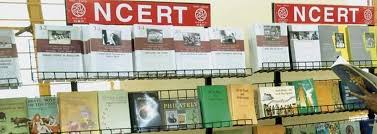
NCERT has, for the first time, introduced the topic in a Class 9 textbook, presenting it as “one of the major challenges” to Indian democracy, as the majority of fundamental rights were suspended during the period.
A new chapter in every sense
The reference appears in the newly developed Social Science textbook, Understanding Society: India and Beyond, where the Emergency has been included in a chapter examining the strengths and challenges of Indian democracy.
An official at NCERT confirmed that this is the first time a section on the Emergency has been added to the Class 9 curriculum.
The timing is significant. The inclusion marks a notable addition to the school curriculum, coming as the country recently observed 50 years since the declaration of the Emergency in 1975.
What the textbook says
The textbook does not shy away from the gravity of what occurred. The section states that in the early 1970s, public dissatisfaction with the government led by Indira Gandhi was growing, with rising unemployment, inflation, and allegations of misgovernance leading to widespread protests.
In June 1975, a National Emergency was imposed on the grounds of internal disturbance.
During this period, a majority of Fundamental Rights were suspended, the press was censored, and numerous political leaders and activists were arrested.
The textbook also honours those who resisted. Mass movements led by Jayaprakash Narayan, a political leader and socialist thinker, popularly known as Lok Nayak, mobilised students and citizens, especially in Bihar and Gujarat.
The Emergency was lifted in 1977, and general elections were held, allowing people to express their will through the ballot.
The defeat of the ruling government demonstrated the strength of Indian democracy and the importance of democratic values.
Broader lessons for today’s students
The Emergency section forms part of a broader discussion on challenges facing democratic systems.
Alongside the Emergency, the textbook discusses issues such as fake news, misinformation, damaging public property, violation of public rules, poverty, regionalism, social discrimination, and gender inequality as challenges to democratic practice.
The chapter also introduces a new section titled “Democracy and You”, added for the first time to help students connect classroom learning with their role as citizens and participants in democratic processes.
Additionally, the revised textbook places considerable emphasis on India’s democratic traditions and institutions, tracing democratic practices to early historical periods and exploring their relevance in contemporary governance.
It also contains a dedicated section on the role of media in a democracy, describing the media as the “fourth pillar of democracy.”
Bureau Report
Leave a Reply