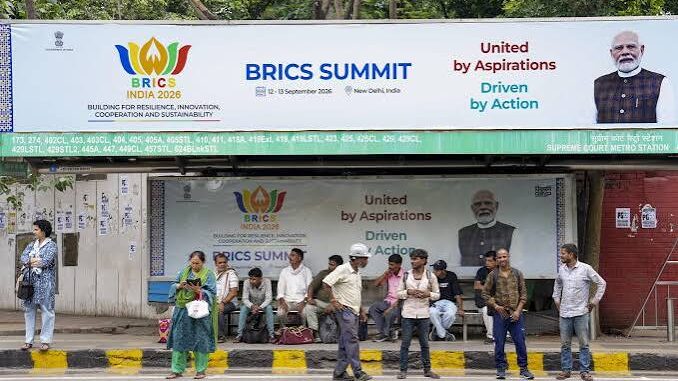
Commuters navigating Delhi between September 11 and 13, 2026, must adjust their travel routes as extensive traffic restrictions and diversions take effect for the international BRICS summit at Bharat Mandapam, Pragati Maidan. Delhi Police issued a comprehensive travel advisory following motorcade rehearsals that affected over 35 major roads and introduced 22 strict diversion points across the capital.
Understanding these five essential guidelines will help residents minimize travel delays and navigate alternative corridors smoothly during the high-profile diplomatic event.
1. Motorcade rehearsals and unpredictable VIP movement
Initial motorcade trials caused temporary gridlocks across central corridors, signaling that spontaneous traffic halts will occur whenever VIP delegations transit between venues and hotels.
Timing disruptions: Rehearsals launched evening restrictions from 7:45 PM to 10:00 PM, a pattern expected to recur intermittently throughout the summit.
Real-time tracking: Motorists are strongly advised to check live traffic applications before stepping out to avoid getting trapped behind secure security convoys.
Emergency priority: Traffic police have confirmed that medical vehicles and genuine emergencies will be granted immediate passage through secured lanes.
2. Major roads and diversion points to avoid
Heavy congestion will center around central New Delhi districts, making specific thoroughfares and roundabouts high-risk zones for everyday drivers.
Affected arteries: Sardar Patel Marg, Mother Teresa Crescent, Teen Murti Marg, Akbar Road, Mathura Road, Janpath, Ashok Road, and Tolstoy Marg will experience heavy restrictions.
Key diversions: Traffic police have set up 22 active diversion points near Connaught Place, Patel Chowk, and the RML Hospital roundabout.
Alternative paths: Motorists should bypass central zones entirely by utilizing outer ring roads and arterial bypasses.
3. Alternate routes to railway stations and the airport
Reaching transit hubs requires strategic route planning to circumvent closed perimeter zones around New Delhi and central nodes.
New Delhi railway station: Commuters should approach via ISBT Kashmiri Gate, Boulevard Road, or Panchkuian Road.
Hazrat Nizamuddin station: Travelers are advised to navigate through AIIMS, Ring Road, and Ashram Chowk.
IGIA Airport transit: Road travel to the airport faces significant bottlenecks; authorities strongly recommend utilizing the Airport Express metro line to guarantee timely arrivals.
4. Impact on public transit, metros, and school closures
While rail networks remain fully operational, local surface transport and academic schedules face direct adjustments during the summit.
Metro reliability: Delhi Metro services will run normally across all lines, serving as the most reliable transit option during peak restriction hours.
Bus and taxi adjustments: City bus routes will experience localized diversions, while autos and taxis must adhere strictly to designated roadside parking rules.
School holiday: All government- and recognised-private-schools under the Directorate of Education will remain closed on September 11 to ease congestion and bolster security.
Bureau Report
Leave a Reply