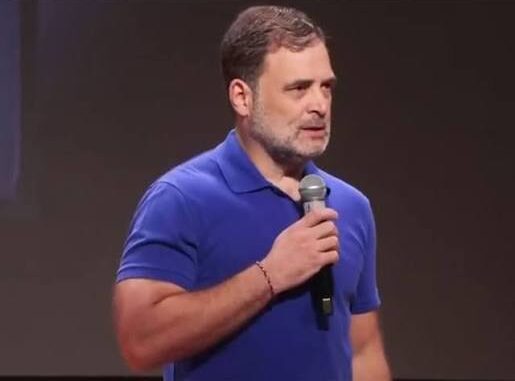
Leader of Opposition in the Lok Sabha Rahul Gandhi on Tuesday criticised the BJP-led central government over the reported move to allow charges on certain UPI transactions, alleging that the decision would eventually put an additional burden on consumers.
In a post on X, Gandhi claimed that the government had opened the door to imposing fees on UPI by allowing a Merchant Discount Rate (MDR) on merchant transactions above Rs 2,000. He argued that although consumers may not be charged directly, merchants could pass on the additional cost by increasing the prices of goods and services.
What is changing for UPI transactions above Rs 2,000?
The Finance Ministry’s notification states that UPI transactions of up to Rs 2,000 cannot attract any direct or indirect charge from banks or system providers. This effectively keeps around 96 per cent of UPI transactions by volume within the zero-charge threshold.
Gandhi, however, focused on the possibility of MDR being levied on merchant UPI transactions above Rs 2,000.
He said that such transactions may account for only around 5 per cent of the total transaction volume, but represent nearly 65 per cent of UPI’s overall transaction value.
“The Modi government has quietly opened the door to imposing fees on UPI. Now, MDR can be levied on merchant UPI transactions above Rs 2,000. Even if these transactions account for just 5% of the volume, they make up nearly 65% of UPI’s total transaction value. The government says no fees will be charged to customers. But where will the fees imposed on shopkeepers ultimately come from? Added to prices, straight out of the customer’s pocket,” Gandhi said.
What is MDR and how would it affect customers?
MDR, or Merchant Discount Rate, is a fee associated with certain digital payment transactions and is generally linked to the cost of processing a payment.
Gandhi’s argument is that if merchants have to bear such charges on eligible UPI transactions, they could eventually recover that cost by raising the prices of products or services.
This means that while a customer may not see a separate UPI fee added to a transaction, the cost could, according to Gandhi’s argument, indirectly be reflected in the final price paid by the consumer.
Rahul Gandhi alleges US payment firms pressured Centre
The Congress leader also alleged that American payment companies have long opposed India’s zero-MDR policy. He claimed that the Modi government had now opened the way for changing that policy in the same direction.
“Just like with the US Trade Deal, Compromised PM Modi is once again surrendering to American pressure,” Gandhi said.
His remarks were directed at the reported possibility of MDR on higher-value merchant UPI transactions, while the Finance Ministry’s notification continues to bar direct or indirect charges on UPI transactions of up to Rs 2,000.
Mallikarjun Kharge also attacks government
Earlier on Tuesday, Congress National President Mallikarjun Kharge also criticised the government over the reported change, alleging that it was looking for new ways to increase the financial burden on people already facing high inflation.
Criticising the proposed notification, Kharge said, “The Modi government’s loot has now reached UPI. ‘No fees on UPI’ has been changed to ‘no fees on UPI transactions up to Rs 2,000’. Sky-high inflation has already emptied the common man’s pocket. Wholesale inflation is near 10%, and the BJP government has planned to impose a ‘Digital Payments Tax’ on the public, aiming to destroy whatever little savings they have left.”
Instead of providing relief to the inflation-weary public, Kharge alleged, the Modi government was “searching for a new way every day to rob their pockets”.
Bureau Report
Leave a Reply