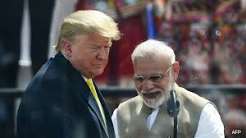
Even though Washington has again placed India on its list of major drug transit or illicit drug-producing countries for fiscal year 2027, US President Donald Trump has praised Prime Minister Narendra Modi’s government for its efforts to tackle illegal opium cultivation in the country.
The Presidential Determination submitted to the US Congress on September 15 names 23 countries, including India, China and Pakistan. The list also includes Afghanistan, Mexico, Colombia, Venezuela and several countries in Central and South America.
The document also contains a direct message from Trump on India’s counter-narcotics efforts.
“I welcome Prime Minister Modi and the Government of India’s efforts to address illicit opium poppy cultivation and bolster supply chain integrity. I look forward to continued cooperation through the United States-India Drug Policy Framework,” he said.
However, Washington makes clear that appearing on the list does not mean that a government has failed to control illegal drugs.
Why India is still on US list
The US determination says countries are included because of a combination of geographic, commercial and economic factors that allow drugs or precursor chemicals to be produced or transported through their territory. A country can therefore appear on the list even when its government is carrying out “robust and diligent” narcotics-control and law-enforcement measures.
India has appeared on the US list in earlier years as well. The latest determination keeps India in the same category for FY2027. The classification includes countries that the United States considers major locations for drug production or transit under its statutory criteria.
The document separately names Afghanistan, Bolivia, Burma and Colombia as countries that had “failed demonstrably” during the previous 12 months to make substantial efforts to meet their international counternarcotics obligations. India is not included in that separate group.
The distinction is important because the two parts of the determination send different messages. India has been placed on the major drug transit or production list, while Washington has also specifically acknowledged New Delhi’s efforts against illicit opium cultivation and its work to strengthen supply-chain controls.
Trump details drug crackdown
The presidential determination also gave the US president an opportunity to list out his administration’s campaign against drug trafficking and narcoterrorist groups.
Trump described the progress made by his administration as “historic”. He said stronger border controls has helped cut seizures of fentanyl and other drugs entering the United States through the southern border by more than half.
He also said drug overdose deaths has fallen significatly and claimed that his administration has saved tens of thousands of American lives. He has made the claims in the presidential determination.
“The narcoterrorists responsible for this invasion are either dead, in jail or living in fear knowing they will be next to face American justice,” Trump said.
He also said the US military has been authorised to strike narcoterrorists wherever they threaten the United States. He cited what he described as record drug seizures by US law-enforcement agencies and increased extraditions of cartel leaders by allied countries.
“We have inflicted unprecedented losses on our enemies, and we are just getting started,” Trump said.
India-US drug cooperation
The reference to the United States-India Drug Policy Framework follows counter-narcotics cooperation between Washington and New Delhi. The latest US statement specifically mentions illicit opium cultivation and the integrity of supply chains.
India is a major producer of legally cultivated opium for pharmaceutical use, while US assessments have for years also identified the country as a transit point and a source of chemicals that can be diverted for illegal drug production. Earlier US reports have cited India’s geographic position and extensive commercial and pharmaceutical networks in their assessment of the country’s drug-trafficking risks.
Bureau Report
Leave a Reply