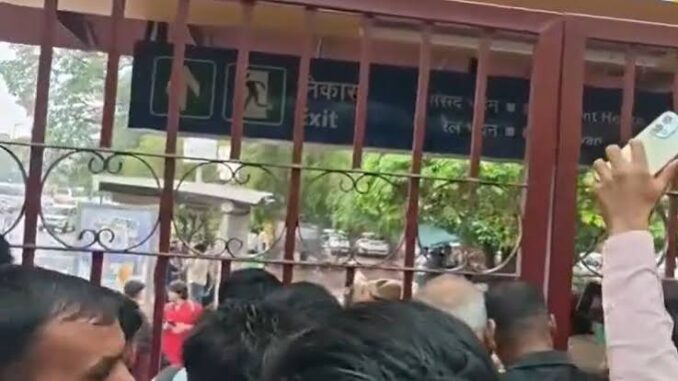
The Delhi Metro Rail Corporation (DMRC) on Wednesday closed 16 metro stations across the national capital until further notice. The move comes amid an ongoing protest at Jantar Mantar led by the Cockroach Janta Party (CJP) and student groups.
In a post on X, Delhi Metro said, “Below mentioned Metro stations have been closed till further instructions. However, Interchange facility shall remain available at Rajiv Chowk, Mandi House and Central Secretariat.”
Full list of closed Delhi Metro stations
Entry and exit gates at the following 16 stations remain closed to the public:
1. Lok Kalyan Marg
2. Rajiv Chowk
3. Patel Chowk
4. Ramakrishna Ashram Marg
5. Barakhamba Road
6. Supreme Court
7. Seva Teerth
8. Janpath
9. Mandi House
10. Central Secretariat
11. ITO
12. Delhi Gate
13. Indraprastha
14. Khan Market
15. Jor Bagh
16. Shivaji Stadium
While entry and exit points at these 16 stations are restricted, DMRC confirmed that interchange facilities will remain operational at key hubs to keep transit moving.
Interchange facilities remain open
To assist daily commuters switching between major lines, interchange services are still active at three primary junctions:
• Rajiv Chowk (Yellow Line ↔ Blue Line)
• Mandi House (Blue Line ↔ Violet Line)
• Central Secretariat (Yellow Line ↔ Violet Line)
Important Note: You can change trains inside these three stations, but you will not be allowed to exit the station onto the street.
Advisory for commuters
Passengers traveling towards Central or Lutyens’ Delhi should allow extra travel time, consider alternative road transport, and check official DMRC social media channels for real-time updates on when normal operations will resume.
Why CJP is protesting?
The protest at Jantar Mantar is being led by CJP along with several student groups over alleged irregularities in national competitive examinations, including the NEET-UG paper leak and CBSE scoring issues.
The protesters are demanding the resignation of Union Education Minister Dharmendra Pradhan, cancellation of affected examinations, and compensation for families of impacted students.
The movement gained attention after activist Sonam Wangchuk joined the protest site and began an indefinite hunger strike.
Clashes during march towards Parliament
Tensions increased during the “Sansad Chalo” march organised by CJP on July 20. Thousands of protesters attempted to move towards Parliament House, where heavy security arrangements were in place.
The situation led to clashes between protesters and security personnel. Police used lathi charges and tear gas to control the crowd. Several protesters and police personnel were reportedly injured during the confrontation.
Following the incident, opposition leaders visited the protest site to express support. CJP representatives also met Union Minister J.P. Nadda and submitted their demands.
Bureau Report
Leave a Reply