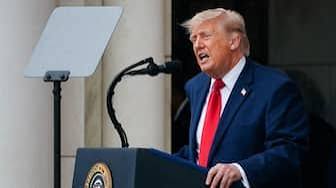
Donald Trump has rolled out fresh double-digit tariffs on more than sixty of America’s trading partners, including India, China and the United Kingdom, accusing them of failing to properly police goods made through forced labour. Depending on the country, the new duties range between 10 and 12.5 per cent, a move critics see as another push by the president to wean the US off imported goods.
The timing wasn’t accidental. The announcement landed just as Trump’s stopgap tariffs, brought in after the Supreme Court struck down his earlier levies, were due to lapse on Friday. Under the new order, countries with no domestic ban on forced-labour imports, among them China, the UK and Japan, will face the steeper 12.5 per cent charge. Those that do have such laws on the books, including India, Sri Lanka and the EU, will only be hit with 10 per cent, provided they’re seen to be enforcing them properly. A handful of goods have been spared altogether, including oil, gas and products covered under the US-Mexico-Canada trade pact.
Why Trump Says He’s Doing This
The White House has framed the entire move as a matter of principle rather than politics, pointing to America’s long history of banning forced-labour goods. US Trade Representative Jamieson Greer put it plainly, saying it was time trading partners matched America’s own century-old stance, adding that the step would help fix what he called “both a human rights abuse and a distortive trade practice” affecting workers worldwide.
Where India Stands
For India, the outcome is unchanged; the tariff rate holds steady at 10 per cent. Indian exports had already been paying a flat 10 per cent surcharge since the Supreme Court’s February ruling, and that arrangement was set to expire this week regardless. Trump had earlier floated the idea of piling on an extra 12.5 per cent over concerns about weak forced-labour enforcement, but the administration ultimately backed off. Officials noted that India, along with Cambodia, Guatemala, Honduras, Sri Lanka and Trinidad and Tobago, had either introduced bans on forced-labour imports or made firm commitments to do so, which was enough to keep them in the lower bracket. Jordan was named separately, tied to a reciprocal trade agreement requiring it to follow through on similar commitments.
More Tariffs On The Horizon
The pressure isn’t expected to ease any time soon. Reports suggest the administration is preparing yet another round of tariffs within weeks, this time targeting nations accused of subsidising excess factory output, production that floods global markets with cheap goods American firms simply can’t compete against.
All of this fits into a wider pattern — Trump pushing hard to rebuild the tariff structure the Supreme Court dismantled in February, this time leaning on legal routes seen as sturdier than the fast-tracked approach that got him into trouble last year.
Bureau Report
Leave a Reply