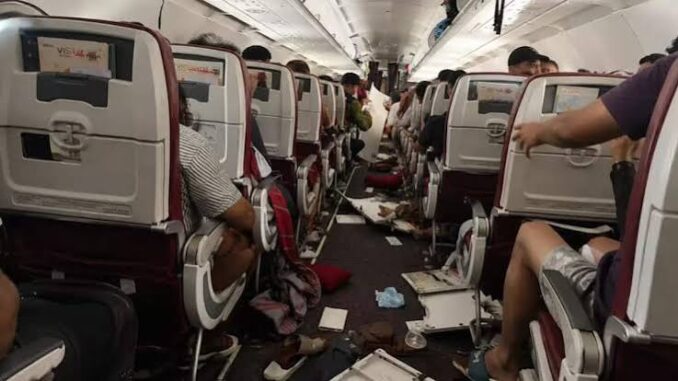
New details emerging from the probe into the Air India Phuket-Delhi flight incident reveal a harrowing picture of what happened on August 4. While initial claims pointed to brief turbulence, an internal cockpit maintenance report tells a very different story, one marked by hydraulic warnings, autopilot dropouts, and critical system alerts high above the ground, according to an NDTV report.
Downplayed statements vs. Technical evidence
Following the incident, Air India issued an official statement at 1:14 PM attributing the sudden drop to a “brief in-flight turbulence-related event” and claiming only minor injuries occurred. By 6:55 PM, the airline updated its statement, removing the reference to turbulence while continuing to minimize the severity of what occurred, as per the report.
However, a post-flight cockpit maintenance printout published at 11:14 AM after the flight landed in Delhi paints a starkly different picture:
Triple hydraulic failure warnings: Airbus A320neo aircraft rely on three independent hydraulic systems to operate flight controls, landing gear, and brakes. At 9:32 AM, warnings flagged low pressure across all three hydraulic systems simultaneously, along with low fluid levels in two reservoirs.
Flight control and system disruption: At that exact time, the autopilot disconnected, and faults surfaced in both the left and right elevator controls, which govern the plane’s pitch.
Door alerts and engine issues: Minutes later, emergency exit door warnings were triggered for the front-right door (9:33 AM) and rear-right door (9:35 AM). Later, at 10:16 AM, Engine 1’s anti-ice system reported a valve pressure fault, followed by another autopilot disengagement at 10:52 AM.
Notably, technical printouts record parameter anomalies and warnings, which do not automatically confirm total mechanical failure.
Severe injuries and pilot drug screening test results
Despite initial claims that only minor bumps occurred, Civil Aviation Minister Ram Mohan Naidu confirmed that at least 20 passengers and four crew members were injured during the 300-foot altitude loss. Two crew members sustained severe spinal and neck injuries near the tailbone and neck.
Meanwhile, the flight’s pilot tested positive for psychoactive substances during a post-flight medical screening in Delhi. A second confirmatory test later validated the initial result, specifically confirming the presence of marijuana (cannabis), NDTV reported, quoting sources.
Investigations by aviation authorities into both the mechanical anomalies and crew compliance remain ongoing.
Bureau Report
Leave a Reply