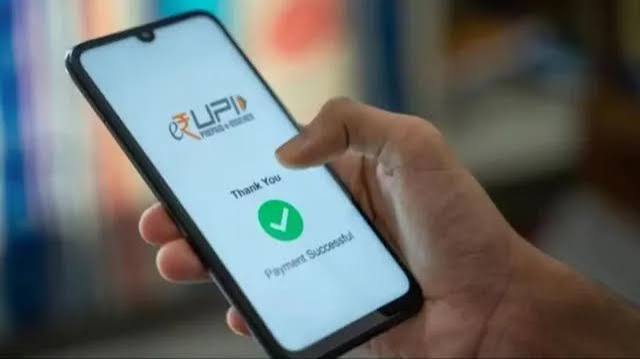
NewDelhi: Under a new government notification issued on September 14, UPI users will not have to pay any transaction charge on payments of up to Rs 2,000. The order also applies to payments made through RuPay debit cards.
The Finance Ministry’s Department of Financial Services has issued a gazette notification setting out the rule for small digital payments. Banks and payment system providers cannot impose any charge on UPI transactions up to Rs 2,000. The restriction applies to charges imposed directly as well as through other means.
The order applies to both sides of a payment. A bank or payment system provider cannot charge the person making the payment or the person receiving it for a UPI transaction within the Rs 2,000 limit.
For example, if a customer pays Rs 800 through UPI at a grocery store, no separate transaction fee can be charged to either the customer or the shopkeeper. The same applies when a RuPay debit card is used for a payment of up to Rs 2,000.
What the new UPI rule means for you
The notification is relevant for small-value digital payments. Grocery stores, street vendors, small shops and other small businesses frequently receive payments through UPI and debit cards.
Under the new order, a payment of Rs 2,000 or less cannot attract a separate charge for the customer or the merchant. The restriction also applies when a charge is indirectly imposed.
The order has been issued under Section 10A of the Payment and Settlement Systems Act, 2007. It specifically sets out the restriction on charges for UPI transactions up to Rs 2,000 and payments involving RuPay debit cards.
Customers will not have to pay any additional fee on payments within the specified limit. Merchants also cannot be charged separately by banks or payment system providers for the same transaction.
UPI payments above Rs 2,000: What changes?
The notification specifies the no-charge rule for UPI transactions up to Rs 2,000. It does not set out a fee for transactions above that amount.
This means the notification does not state whether a UPI payment above Rs 2,000 will attract a charge or what the rate would be if such a charge is introduced. The treatment of higher-value transactions will depend on the applicable rules and fee structure.
The issue of UPI charges came up following a bill introduced in Parliament to amend the relevant law. The proposed changes included a structure under which charges could be permitted for selected transactions in the future.
The government had also clarified that any such system would not put the cost on ordinary users.
What is MDR, why is it important?
The Merchant Discount Rate (MDR) is a fee charged on digital payments accepted by merchants. The government had said that any MDR system introduced under the proposed system would apply only to certain merchant transactions above a prescribed threshold.
Person-to-person payments would continue to be free under the system proposed by the government.
The September 14 notification sets the rule for smaller UPI payments in clear terms. Banks and payment system providers cannot impose direct or indirect transaction charges on UPI payments up to Rs 2,000, while the notification does not specify a fee structure for payments above that limit.
Bureau Report
Leave a Reply