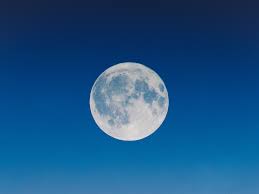
Once in a blue moon, and this month, quite literally. On May 30, 2026, the sky will host something that only rolls around every two to three years: a Blue Moon. It’s the second full moon in a single calendar month, and May 2026 has managed to fit two of them in. The first appeared on May 1. Now comes the finale.
Despite what the name suggests, don’t expect anything tinted blue; the moon will look as it always does, maybe a warm orange when it first climbs above the horizon, then a clean, bright white as the night settles in. No telescope required, no special equipment, no complicated timing. Just a clear sky and a reason to look up.
What is a Blue Moon?
A Blue Moon is simply the second full moon to occur within a single calendar month. The reason it happens comes down to a timing mismatch. The Moon completes one full cycle in about 29.5 days, but most of our calendar months run a bit longer than that. Occasionally, that gap is just enough to squeeze two full moons into the same month.
May 2026 is one of those months. The first full moon showed up on May 1. The second Blue Moon is visible on May 30.
Does it actually look blue?
No. It doesn’t.
The name is misleading, and honestly always has been. On most nights, a Blue Moon looks exactly like any other full moon. When it first rises, you’ll likely catch it looking orange or faintly reddish, not blue at all. That’s the atmosphere at work. Moonlight has to travel through a thick slice of air when the moon is low on the horizon, and that journey scatters away the blue wavelengths, letting the warmer reds and oranges come through. It’s the same reason sunsets look the way they do.
As the moon climbs higher, it’ll shift to the bright white you’d expect. Still striking. Just not blue.
Will it be visible in India?
Yes, clearly.
The evening of May 30, 2026, is your window. As the sunset fades, the moon will rise looking large and a warm shade of orange. Give it some time, and it’ll brighten to white as it moves up into the sky. Technically speaking, the moon hits peak fullness at 4:45 AM IST on May 30, but you won’t notice any difference with the naked eye. It’ll look full on the evening of the 30th.
When and how to watch
When:
Evening of May 30, 2026 – the best time to watch
Early hours of May 31, 2026 – if you want to catch it at its technical peak
Where:
Anywhere the sky is clear
Open spaces work best: rooftops, terraces, open fields
How:
No equipment needed. Your eyes are enough
Watch it during moonrise for the most dramatic view, that’s when it looks largest and most colourful
Get away from bright lights if you can; light pollution dulls the whole experience
Why does this happen at all?
It’s purely a calendar quirk. The lunar cycle runs 29.5 days, and our months run 30 to 31. That small difference adds up, and every couple of years or so, it creates a month where two full moons fit side by side. Not an astronomical event, exactly more of a scheduling coincidence. Still, it does not come around constantly.
Blue Moons happen roughly once every two to three years. They’re not vanishingly rare, but they’re not common either. This one is the only Blue Moon happening in 2026. The next one won’t arrive until 2029.
The Blue Moon won’t be blue. It won’t do anything a regular full moon doesn’t do. But smething about knowing it’s the second full moon of the month , the last one of its kind for three years, makes it worth a few minutes of your time. Step outside on the evening of May 30, find a clear patch of sky, and just look up. That’s really all there is to it.
Bureau Report
Leave a Reply