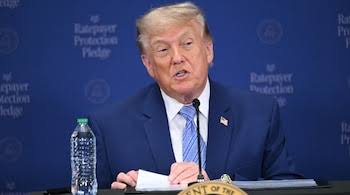
US President Donald Trump said a proposed sanctions bill that could impose tariffs of up to 100% on India and four other countries “shouldn’t be necessary”. However, he suggested making the legislation stronger by including tariffs on Iran. His remarks came as the US Senate considers a bill aimed at reducing Russia’s energy revenues by targeting countries that continue buying Russian oil.
Trump comments on Russia and Iran sanctions bill
Speaking about the proposed legislation, Trump said, “…it shouldn’t be necessary, to be honest. But if it’s necessary… I’d like them to add Iran as tariffs, not just as sanctions. I think it’s important. That’s what Lindsey wanted, because I heard that they have tariffs on Russia, but not on those five countries with having to do with Iran. I’d like to see tariffs on Iran. It would make it much stronger…”
Trump’s remarks came in response to a sanctions bill that has cleared the US Senate and could affect major buyers of Russian oil, including India.
What is the Lindsey Graham Russia Accountability Bill?
The legislation, known as the Lindsey Graham Russia Accountability Bill, was developed after nearly two years of discussions led by Republican Senator Lindsey Graham.
The bill aims to reduce Russia’s energy income by targeting countries that continue purchasing Russian oil and gas. Before his death, Graham worked on the bill’s strategy with Trump. The White House has expressed support for the proposal.
Officials have said that Trump supports the bill, giving it significant political backing.
Which countries could face tariffs?
The bill would allow the US Trade Representative to impose tariffs on countries that continue buying Russian oil.
The five major buyers named in the legislation are:
India
China
Slovakia
Hungary
Azerbaijan
The bill also targets major buyers of Russian natural gas. However, some European countries could receive exemptions if they import less than 15% of their gas from Russia and are reducing their dependence.
Why could India be affected?
The United States wants to reduce Russia’s energy earnings and limit funds available for its war effort. India, on the other hand, says it buys oil based on market conditions and national interest.
Since 2022, India has increased purchases of discounted Russian crude oil. The government has maintained that affordable energy is important for fuel prices and energy security.
US lawmakers explain the goal
Senator Richard Blumenthal said tariff levels remain flexible and are intended to encourage countries to reduce their dependence on Russian energy.
He said the goal is to set tariffs high enough “to discourage China, India, and other major purchasers of Russian oil and gas strongly.”
Bill also targets Russia’s shadow fleet
The legislation includes measures against Russia’s so-called shadow fleet. These are vessels used to transport Russian oil while avoiding existing restrictions.
Senator James Risch, chairman of the Senate Foreign Relations Committee, added provisions designed to increase pressure on these tanker networks.
Lawmakers have narrowed the list of possible targets from 63 countries to a smaller group of major energy buyers.
The bill also allows the US administration to modify or reduce tariffs in certain national security situations.
The US Senate is expected to take up the legislation before the end of August. If passed, it could create fresh challenges for India’s energy policy and add a new issue to India-US relations.
Bureau Report
Leave a Reply