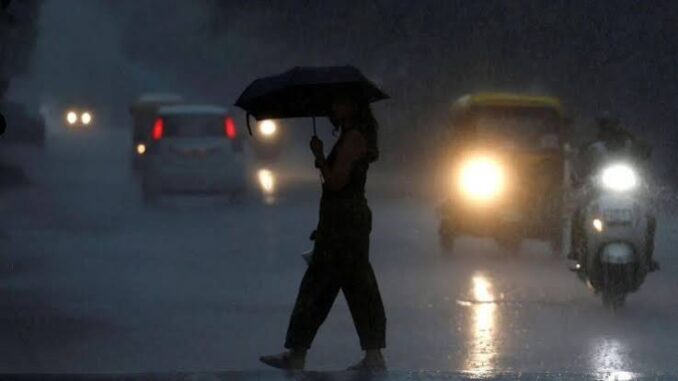
The India Meteorological Department (IMD) said on Monday that rainfall across the country is likely to be below normal in September, the final month of the monsoon season. This suggests that the four-month monsoon is likely to conclude with an overall rainfall deficit, as forecast earlier, largely due to the influence of El Nino.
August recorded a rainfall deficit of more than 16% nationwide, despite heavy rains in some regions. The month was also the warmest August in India since 1901, with the country’s mean temperature reaching 28.01°C, according to the IMD.
Region-wise, South Peninsular India experienced its second-warmest August since 1901. East and Northeast India recorded their third-warmest August, while Northwest India witnessed its fifth-warmest August in 126 years.
As of August 31, the country had recorded a 14% deficit in cumulative rainfall between June 1 and August 31, despite receiving ‘normal’ rainfall in July. The shortfall stood at 35% in June. Of the 741 districts assessed for monsoon rainfall distribution, 312 districts (42%) received ‘below-normal’ rainfall, while 38 districts (5%) recorded ‘large deficient’ rainfall as of August 31.
The forecast of ‘below-normal’ rainfall in September could result in an overall decline in kharif acreage. Although the sowing of most seasonal crops is nearly complete, the total acreage is already around 2% lower than during the corresponding period last year. Insufficient rainfall in September could also raise input costs as farmers may have to spend more on irrigation to sustain standing crops.
“Spatially, many parts of the country are likely to receive below-normal rainfall, but some areas of northwest, northeast, east, east-central and south-east peninsular India are likely to receive ‘normal to above-normal’ rainfall,” said IMD chief Mrutyunjay Mohapatra.
He further said “strong El Nino conditions” are currently prevailing over the equatorial Pacific Ocean, with sea surface temperature remaining above normal across central and eastern equatorial Pacific.
He said “strong El Nino conditions” are currently prevailing over the equatorial Pacific Ocean, with sea surface temperatures remaining above normal across the central and eastern equatorial Pacific. Mohapatra said these conditions are expected to strengthen further in the coming months, indicating a likely adverse impact on rainfall in September.
El Nino is generally associated with a weaker monsoon and harsher summer conditions in India. Meanwhile, neutral Indian Ocean Dipole (IOD) conditions are currently prevailing over the Indian Ocean and are expected to continue through September. This means the monsoon is unlikely to receive any rainfall support from the phenomenon, as only a positive IOD is known to enhance rainfall activity.
Bureau Report
Leave a Reply