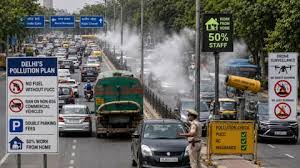
In an unprecedented transition from reactionary measures to proactive strategies, the Government of Delhi has notified a “Proactive Winter Air Quality Management Framework” to counteract the severe rise in toxicity levels due to smog experienced annually during the winter months.
In announcing the new framework, Chief Minister Rekha Gupta has asserted that the administration will not wait until the air quality index (AQI) hits the “Severe” or “Hazardous” category levels for stringent actions to be taken. Rather, advanced legal provisions and compliance timelines will be created in order to ensure that there is enough time for the preparation on the part of the businesses, transit authorities, and citizens alike. The framework shall run parallel with the current Graded Response Action Plan (GRAP) from November 1 to February 28 each year.
Fuel restrictions: No valid PUC, no petrol
Following the rigorous guidelines provided by the proactive framework, the city’s fueling system shall enforce a strict no-nonsense policy in that no fuel station or petrol pump within Delhi will provide any fuel to any vehicle that does not have a valid Pollution Under Control (PUC) certificate. The measure seeks to automatically exclude heavily polluting vehicles from operating within the capital’s transport routes.
Ban on the commercial fleet and parking fees deterrent
To curb the traffic congestion and emission of pollutants, the government is putting several blockades and financial deterrent measures into place:
Entry ban on commercial fleet vehicles (Nov 1 – Jan 31): Any non-BS6 fleet vehicles that are registered outside of Delhi will be restricted from entering the territorial borders of the capital city. Exceptions will be made only for electric vehicles, CNG, emergency services, and government-operated transport.
Increased parking fees (Nov 1 – Feb 28): To encourage the residents of the capital city not to use any of the private vehicles during the winter season, the government will double the parking fees at the official government, municipal, and private parking stations.
Work-from-home protocol for staff and dust management
Another important set of regulations of the state framework includes a mandatory regulation regarding the size of the workforce in the organisations, as well as the development of real estate. When the forecasts predict the onset of periods of dangerous stagnation, the corporations need to transition their workforce to Work From Home (WFH) protocols for 50% of employees.
Moreover, dust-mitigation strategies are to be aggressively pursued during November 1 to January 31 in all construction and demolition infrastructure projects. Installation of high-powered anti-smog guns, mist-suppression systems, and wind-breaking barriers is compulsory for big commercial buildings. Severe industrial freezings may take place during December 10 to January 20 when there are expected peak pollution levels.
Drone surveillance and imposition of strict penalties
Government is beefing up its surveillance techniques and using technology to ensure the detection of those who violate pollution laws. Drone surveillance and deployment field units will conduct day-and-night aerial surveillance to detect open waste burning, leaf burning, and non-compliance with dust mitigation norms in construction sites.
The Residents’ Welfare Association and other local institutions have been ordered by law to facilitate the implementation of the pollution control strategy. Violations of the code will attract punitive actions and environmental compensation and stoppage of the work.
Bureau Report
Leave a Reply