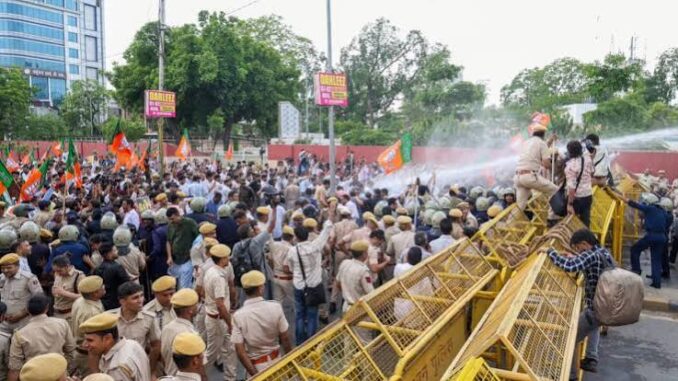
The rule of law is said to be equal for everyone. However, those protesting against crimes like paper leaks appear to be supporting criminals. The recent threat by the Cockroach Janta Party (CJP) to resume nationwide agitations over the withdrawal of FIRs introduces a deeply troubling dynamic into a delicate situation. While the right to protest is a cornerstone of any vibrant democracy, leveraging the threat of renewed street mobilisation while negotiations are sub judice borders on political blackmail.
The core friction centres on the government’s alleged failure to issue written assurances for the immediate withdrawal of all FIRs against protesters. CJP spokesperson Saurav Das has accused the Centre of weaponising the Supreme Court’s observations, specifically that investigations into existing FIRs can continue, as a convenient loophole to renege on promises made during the negotiations that led to Education Minister Dharmendra Pradhan’s resignation and the suspension of the 37-day protest.
However, this stance ignores the calibrated, objective safeguards established by the apex court itself. The Supreme Court has clearly outlined the unconditional release of students with no criminal records and minors, while wisely refusing to grant a blanket, indiscriminate amnesty that would shield individuals with criminal antecedents or those involved in violent clashes. By demanding an all-encompassing withdrawal of legal proceedings regardless of conduct, the CJP is attempting to bypass judicial scrutiny.
One cannot gloss over the chaotic reality of the July 20 ‘Parliament March’. While grave allegations of excessive police force, arbitrary detentions, and misconduct are rightfully being examined, with the Supreme Court indicating the formation of an SIT, the friction is inherently two-sided. Over 100 police personnel sustained injuries during the clashes, raising legitimate questions about whether anti-social elements infiltrated the demonstrations.
Delhi Police have clearly said that as many as 2,873 people with criminal antecedents were present between July 20 and 25 during the students’ protest site at Jantar Mantar. These criminals were identified using Facial Recognition System (FRS) and through technical means, said a senior police official. Most of the identified persons were seen in FRS cameras in North-East Delhi, including Seelampur, Chand Bagh, Jafrabad and some colonies in South -East Delhi like Jamia Nagar, Shaheen Bagh and Okhla, the official said. At least 989 ‘protestors’, out of the 2,873 protestors with criminal antecedents, are suspected to be involved in heinous offences, said the official.
To use the threat of chaos on the streets as leverage while the highest court of the land is actively intervening to ensure a fair, independent investigation is counterproductive. The rule of law requires due process to take its course, not ultimatums from political actors seeking unconditional clearance outside legal parameters. If the CJP genuinely cares about the welfare of students, it should allow the judicial process and the proposed SIT to separate peaceful student demonstrators from perpetrators of violence, rather than resorting to pressure tactics that threaten public order.
Bureau Report
Leave a Reply