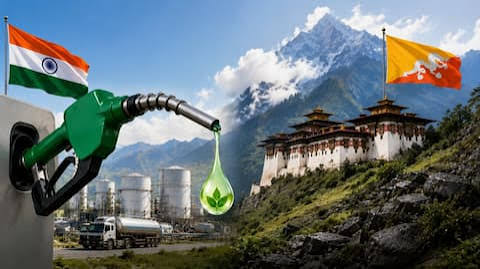
While India pushes forward with its bold vision of green energy, its regional biofuels campaign has hit an infrastructural snag. The Himalayan Kingdom of Bhutan has turned down a proposal to use the E20 petrol, a special variant that contains a mixture of 20% ethanol and petrol. According to reports, the refusal of Bhutan comes on the grounds of a lack of special fuel storage infrastructure that would safely contain such a complex fuel product.
Storage challenges in a mountainous terrain
The officials of Bhutan said that the reason for their refusal was the difficulties associated with storing and transporting a special ethanol fuel in a mountainous region. According to Bhutanese authorities, this problem exists because ethanol is a very hygroscopic fuel, meaning that it easily absorbs water from the atmosphere.
When it happens, it leads to the process of phase separation in which two liquids become separated. In the case of fuel products, the phase separation may lead to serious harm to the car engine and decrease the performance.
As the official of Bhutan stressed, the problem is extremely serious in his country because of the following reasons:
- Depots at high altitudes: A vast majority of the fuel depots in Bhutan are stationed in tough and mountainous terrain.
- Moisture penetration: Stopping any form of moisture penetration and entry of atmospheric moisture in these humid hills is next to impossible.
- Quality control: The risk of the fuel going bad before reaching the vehicle tank is unsustainable in these circumstances.
Upgrades necessary for a future changeover
Although India has made extensive investments in retrofitting its domestic storage and supply chain to handle E20 blends, Bhutan’s existing infrastructure for depot and handling systems lacks the capacity to make a transition. Analysts argue that until Bhutan undergoes a significant capital-intensive revamp of its energy system infrastructure, traditional petrol is the sole alternative for it.
This shows that there is one underlying geopolitical reality – there cannot be a one-size-fits-all approach in the greener energy transition. Countries with difficult geography and fewer distribution networks of fuels need individual timescales despite their full backing of worldwide carbon reduction goals.
Implications for India’s regional energy policy
India’s ethanol blending project is unlikely to see any consequences from Bhutan’s decision since the project is largely determined by the country’s domestic needs and aimed at reducing the consumption of crude oil imports. Nonetheless, this case shows an important lesson for India’s regional energy policy.
In its role as a major supplier of environmentally friendly fuel, India should pay as much attention to the storage capacity of its regional partner as to the actual fuel supply. Fuel mixture that is designed specifically for India’s plain territories cannot simply be delivered to another state situated among the mountains.
Bureau Report
Leave a Reply